
When you nurture differences instead of trying to fix them, something remarkable happens—you unlock potential that was always there, waiting for the right environment to flourish. 🌱 In 2026, our understanding of neurodivergence has evolved far beyond outdated models of deficit and correction. Today, we recognize that conditions like ADHD, autism, dyslexia, and other neurological differences aren’t problems to solve but unique ways of experiencing and interacting with the world that deserve support, understanding, and celebration.
Nurturing neurodivergence represents a fundamental shift from trying to make neurodivergent individuals conform to neurotypical standards toward creating environments where their natural strengths can thrive. This approach recognizes that when we provide appropriate support and accommodations, neurodivergent people don’t just survive—they excel in ways that benefit entire communities.
Key Takeaways
• Strength-based support works better than deficit-focused correction for building confidence and fostering growth
• Environmental modifications often matter more than individual effort in creating success for neurodivergent people
• Understanding common traits helps shift perspective from seeing challenges to recognizing different processing styles
• Age-appropriate strategies support neurodivergent individuals through different life stages effectively
• Long-term nurturing leads to better mental health, stronger relationships, and authentic self-expression
What Does “Nurturing Neurodivergence” Really Mean?
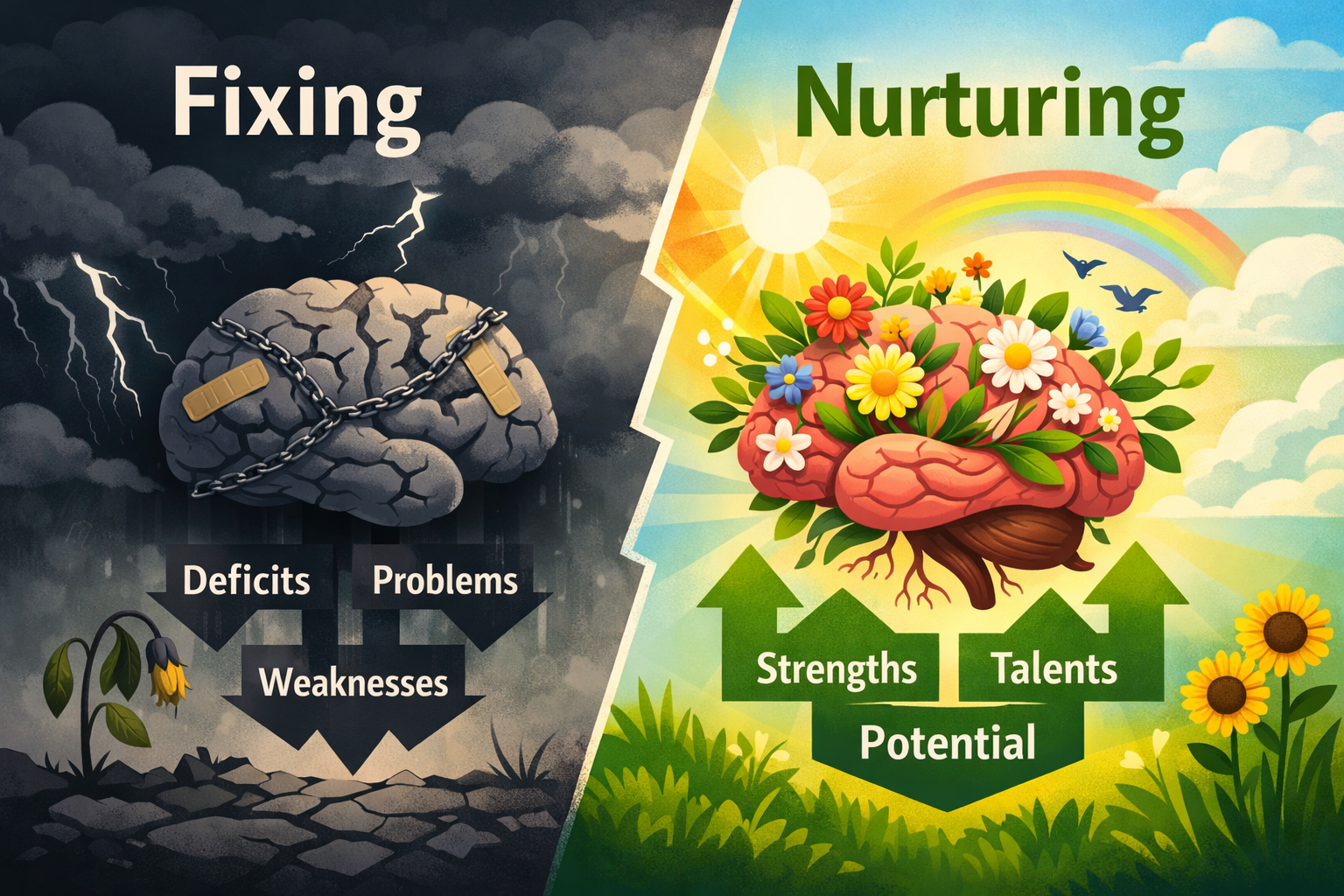
Nurturing neurodivergence begins with a fundamental mindset shift away from deficit-based thinking. Instead of asking “What’s wrong?” or “How can we fix this?”, nurturing approaches ask “What support does this person need?” and “How can we help their strengths shine?”
This philosophy embraces the reality that neurodivergent brains are wired differently—not incorrectly. These differences often come with remarkable abilities: the ADHD brain’s capacity for creative problem-solving, the autistic mind’s attention to detail and pattern recognition, or the dyslexic person’s exceptional spatial reasoning and big-picture thinking.
Providing accommodations without shame forms the cornerstone of nurturing support. Just as we don’t shame someone for wearing glasses, we shouldn’t shame neurodivergent individuals for needing noise-canceling headphones, fidget tools, or extra processing time. These accommodations level the playing field rather than providing unfair advantages.
Supporting regulation instead of enforcing conformity means recognizing that neurodivergent people may need to stim, take breaks, or process information differently. Rather than suppressing these natural regulatory behaviors, nurturing environments provide safe spaces and appropriate outlets for them.
Understanding Common Neurodivergent Traits
Recognizing neurodivergent traits as differences rather than deficits transforms how we support growth and build confidence. Each trait that might seem challenging in traditional settings often represents a unique strength waiting for the right context.
Executive function differences affect planning, organization, and task initiation. While this might look like procrastination or disorganization, it often reflects a brain that processes information holistically rather than sequentially. Many neurodivergent individuals excel when given visual organizers, body doubling, or deadline flexibility.
Sensory processing sensitivities mean that lights, sounds, textures, or crowds might feel overwhelming. However, this same sensitivity often translates to exceptional awareness of environmental details, artistic abilities, or intuitive understanding of others’ emotions.
Hyperfocus and deep interests allow neurodivergent individuals to dive deeply into subjects that capture their attention. While this might seem “obsessive” to others, these intense interests often become pathways to expertise, innovation, and career success.
Emotional intensity means feelings are experienced more deeply and intensely. This trait, while sometimes challenging to navigate, often correlates with exceptional empathy, creativity, and passion for justice and fairness.
Social communication differences might involve direct communication styles, difficulty with small talk, or challenges reading nonverbal cues. These same individuals often excel at authentic relationships, clear communication, and thinking outside social conventions.
Nurturing Neurodivergent Children
Creating supportive environments for neurodivergent children starts with establishing predictable routines that provide security and reduce anxiety. Visual schedules, consistent expectations, and advance notice of changes help children feel safe and capable of managing their day.
Encouraging special interests rather than limiting them opens doors to learning and inner strength development. A child obsessed with dinosaurs can learn reading, math, science, and research skills through their passion. These interests often become bridges to academic success and social connections with like-minded peers.
Teaching emotional regulation skills involves helping children understand their nervous system responses and develop coping strategies. This might include breathing techniques, sensory breaks, or identifying early warning signs of overwhelm. The goal isn’t to eliminate big emotions but to provide tools for managing them safely.
Reducing shame and comparison requires actively celebrating differences and avoiding language that suggests the child is “broken” or needs fixing. Instead of saying “Why can’t you just sit still like everyone else?”, try “Your body needs movement to help your brain focus. Let’s find ways to make that work.”
Collaborating with teachers ensures consistency between home and school environments. Share what works at home, advocate for appropriate accommodations, and maintain open communication about the child’s needs and progress.
Professional support becomes valuable when children struggle significantly with daily functioning, show signs of anxiety or depression, or when families need additional strategies and resources.
Nurturing Neurodivergent Teens
Adolescence brings unique challenges for neurodivergent individuals as they navigate identity formation while managing neurological differences. Supporting teens means helping them understand their neurodivergence as part of their identity rather than something to hide or overcome.
Managing burnout becomes crucial during these years as academic and social demands intensify. Teens need permission to rest, strategies for recognizing overwhelm, and support in developing emotional intelligence to navigate complex social situations.
Teaching self-advocacy skills empowers teens to communicate their needs effectively. This includes understanding their rights, practicing clear communication about accommodations, and building confidence to speak up in various settings.
Addressing peer relationships involves helping teens find their tribe while developing skills for broader social interactions. Many neurodivergent teens thrive in interest-based groups, online communities, or structured social activities rather than traditional social settings.
Building resilience without pressure means supporting teens through challenges while avoiding the message that they need to “toughen up” or “try harder.” Instead, focus on developing coping strategies and celebrating progress.
Nurturing Neurodivergent Adults
Adult support focuses on workplace accommodations that enable professional success. This might include flexible schedules, quiet workspaces, written instructions, or project-based rather than meeting-heavy roles. Many employers discover that accommodating neurodivergent employees leads to increased innovation and productivity.
Energy management and pacing become essential life skills. Neurodivergent adults often need to structure their lives differently, perhaps working intensely for periods followed by rest, or organizing tasks around energy levels rather than arbitrary schedules.
Reframing “productivity” means recognizing that neurodivergent individuals may work in bursts, need more processing time, or produce their best work under different conditions than neurotypical colleagues. Quality and innovation often matter more than consistent daily output.
Building supportive relationships involves finding people who appreciate neurodivergent traits and communication styles. This might mean developing better communication skills while also seeking relationships that don’t require constant masking.
Healing from late diagnosis or masking often requires processing years of feeling different without understanding why. Many adults benefit from therapy, support groups, or self-discovery practices that help them integrate their neurodivergent identity.
The Role of Environment in Nurturing Neurodivergence
Environment often matters more than individual effort in determining success for neurodivergent people. Sensory-friendly spaces with appropriate lighting, sound levels, and minimal distractions can dramatically improve focus and comfort.
Clear communication involves providing information in multiple formats, giving specific rather than vague instructions, and checking for understanding without condescension. Written follow-ups to verbal instructions often prevent misunderstandings.
Flexibility in expectations recognizes that neurodivergent individuals might achieve the same goals through different methods or timelines. A student might demonstrate knowledge through projects rather than tests, or an employee might excel with deadline flexibility.
Psychological safety creates an environment where people feel safe to be authentic, ask for help, and make mistakes without judgment. This safety is essential for neurodivergent individuals who may have experienced years of criticism or rejection.
When environments are designed with neurodivergent needs in mind, everyone benefits. Universal design principles that support neurodivergence often improve experiences for neurotypical individuals as well.
Practical Strategies for Daily Support
Visual schedules and reminders help with executive function challenges by making abstract time concepts concrete. Digital tools, color-coding systems, and visual cues can support organization and task completion.
Body-based regulation practices include movement breaks, sensory tools, breathing exercises, and mindfulness techniques. These practices help manage nervous system activation and maintain optimal functioning throughout the day.
Strength-based goal setting focuses on leveraging natural abilities rather than forcing improvement in challenge areas. A person with ADHD might set goals around creative projects rather than detailed administrative tasks.
Structured flexibility provides frameworks that can be adapted as needed. This might mean having consistent morning routines with flexibility in the specific activities, or project deadlines with flexibility in daily work schedules.
Community and peer support groups connect neurodivergent individuals with others who share similar experiences. These connections reduce isolation and provide practical strategies from people who truly understand the challenges and strengths of neurodivergence.
Common Mistakes to Avoid
Over-correcting behavior focuses too much on eliminating neurodivergent traits rather than supporting the person in managing them effectively. Stimming, for example, serves important regulatory functions and shouldn’t be stopped without providing alternative outlets.
Comparing to neurotypical standards sets unrealistic expectations and ignores the reality of neurological differences. A neurodivergent person’s version of organized or social might look different while being equally valid.
Ignoring burnout dismisses the real impact of constantly adapting to neurotypical environments. Neurodivergent individuals often need more recovery time and different types of rest than their neurotypical peers.
Minimizing struggles with phrases like “everyone has trouble with that” or “you’re not that different” invalidates real challenges and prevents appropriate support. Acknowledging difficulties while maintaining hope creates better outcomes than dismissing concerns.
Forcing social norms that don’t align with neurodivergent communication styles can lead to masking and mental health challenges. Instead, help individuals navigate social expectations while maintaining authenticity.
The Long-Term Benefits of Nurturing Neurodivergence
When neurodivergent individuals receive appropriate support and understanding, the results extend far beyond immediate problem-solving. Increased confidence develops naturally when people feel accepted and supported in their authentic selves rather than constantly trying to conform to external expectations.
Better mental health outcomes result from reduced masking, decreased shame, and increased self-acceptance. Many neurodivergent individuals who receive nurturing support report significant improvements in anxiety, depression, and overall well-being.
Stronger relationships develop when people feel safe to be authentic. Neurodivergent individuals who don’t have to mask constantly can form deeper, more genuine connections with others who appreciate their true selves.
Career success aligned with strengths becomes possible when workplace accommodations and strength-based approaches are implemented. Many neurodivergent individuals excel in careers that leverage their unique abilities and thinking styles.
Authentic self-expression flourishes in supportive environments, leading to increased creativity, innovation, and personal satisfaction. When people don’t have to spend energy masking their neurodivergence, they can channel that energy into meaningful pursuits and contributions.
These benefits create positive ripple effects that extend to families, workplaces, and communities. Organizations that successfully support neurodivergent individuals often discover increased innovation, different problem-solving approaches, and improved inclusive practices that benefit everyone.
Conclusion
Nurturing neurodivergence represents more than just a support strategy—it’s a recognition that neurological differences are valuable variations in human experience rather than deficits to correct. When we shift from trying to fix neurodivergent individuals to creating environments where they can thrive, we unlock potential that benefits entire communities.
The journey of supporting neurodivergent strengths, confidence, and growth requires patience, understanding, and a willingness to challenge traditional approaches. It means celebrating the ADHD entrepreneur’s innovative thinking, the autistic researcher’s attention to detail, and the dyslexic artist’s unique perspective. Most importantly, it means recognizing that neurodivergent individuals don’t need to be “fixed”—they need to be understood, supported, and valued for their authentic selves.
Take action today by examining your own assumptions about neurodivergence, advocating for inclusive environments in your workplace or community, and supporting the neurodivergent individuals in your life by asking what they need rather than assuming what they should change. Remember that small shifts in understanding and support can create profound transformations in someone’s life trajectory.
The future belongs to communities that embrace neurodiversity as a strength. By nurturing neurodivergence, we create a world where everyone can contribute their unique gifts and perspectives, leading to innovation, creativity, and solutions we might never have imagined otherwise. Start today—the impact of your support extends far beyond what you might realize. 🌟


