
In 2026, conversations about brain differences have become more common than ever before. Yet despite growing awareness, many people still mix up two important terms: neurodiversity and neurodivergence. These words sound similar and relate to the same topic, but they mean very different things. Understanding this distinction can transform how we think about neurological differences and create more inclusive communities for everyone.
Key Takeaways
• Neurodiversity is a concept that views brain differences as natural human variation, not disorders to be fixed
• Neurodivergence describes individuals whose brains function differently from the typical majority
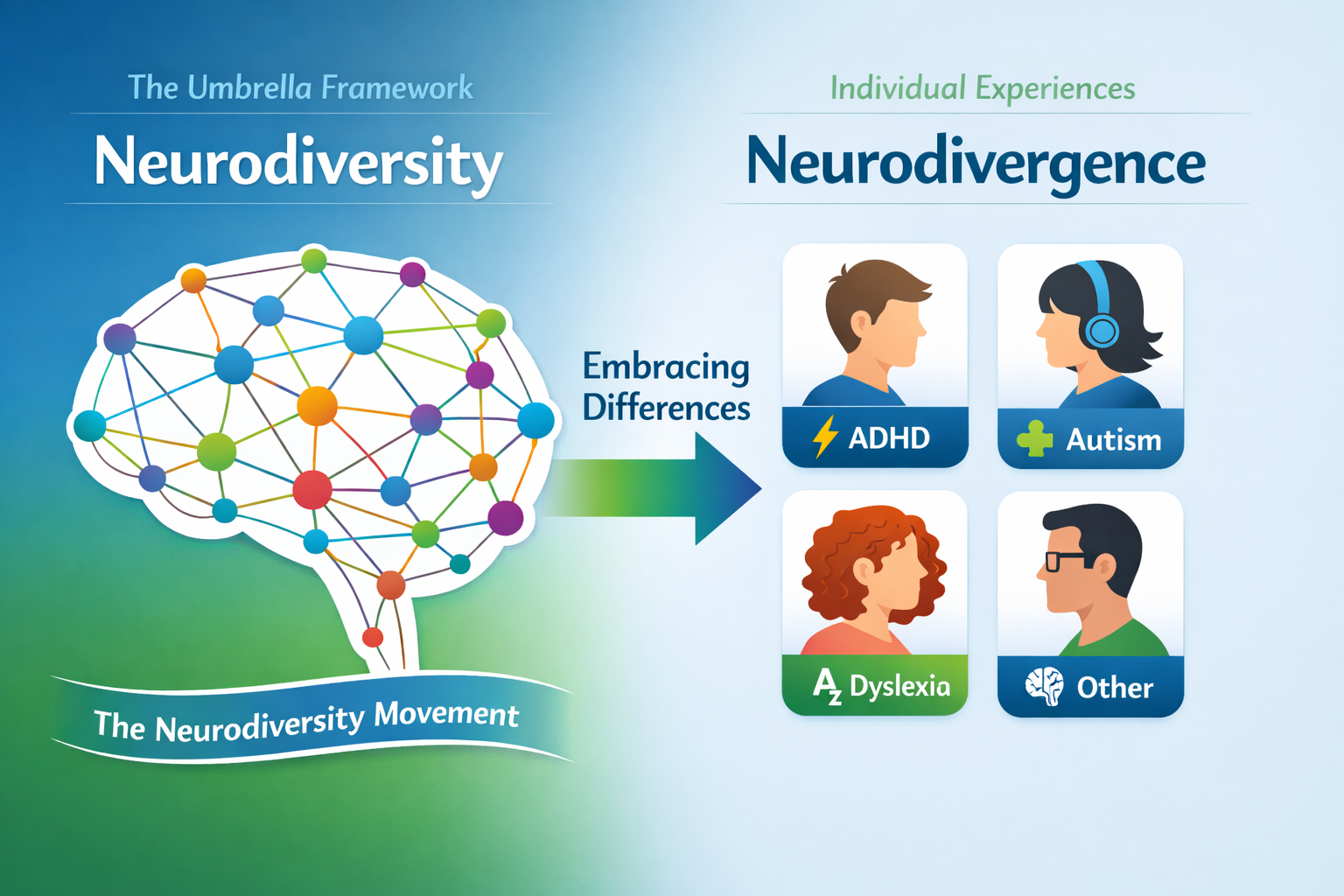
• These terms are connected but not interchangeable – one is a framework, the other describes people
• Understanding both concepts helps reduce stigma and promotes acceptance of neurological differences
• Supporting neurodivergent individuals benefits entire communities through diverse perspectives and innovation
What Is Neurodiversity?
Neurodiversity represents a revolutionary way of thinking about brain differences. This concept suggests that neurological variations are simply part of natural human diversity – like differences in height, eye color, or personality traits.
The neurodiversity movement began in the 1990s, primarily within the autism community. Advocates argued that conditions like autism, ADHD, and dyslexia shouldn’t be viewed as diseases requiring cures. Instead, they proposed seeing these differences as valuable variations in human neurology.
Core Principles of Neurodiversity
The neurodiversity framework rests on several key ideas:
- Natural variation: Brain differences exist naturally across all human populations
- Value in difference: Neurological variations bring unique strengths and perspectives
- Social model: Many challenges come from lack of accommodation, not the conditions themselves
- Acceptance over cure: Focus should be on support and inclusion, not elimination of differences
This perspective has gained significant traction in education, workplace policies, and healthcare approaches. Many organizations now recognize that improving social skills requires understanding different communication styles rather than forcing conformity.
What Is Neurodivergence?
Neurodivergence describes individuals whose brain function differs significantly from what society considers typical or “neurotypical.” This term applies to people with various conditions that affect how they process information, communicate, learn, or behave.
Common Neurodivergent Conditions
Several conditions fall under the neurodivergent umbrella:
| Condition | Key Characteristics | Estimated Prevalence |
|---|---|---|
| ADHD | Attention differences, hyperactivity, impulsivity | 5-7% of population |
| Autism | Social communication differences, sensory sensitivities | 1-2% of population |
| Dyslexia | Reading and language processing challenges | 5-10% of population |
| Dyspraxia | Motor coordination and planning difficulties | 2-6% of population |
| Tourette’s | Involuntary tics and vocalizations | 0.3-1% of population |
| OCD | Obsessive thoughts and compulsive behaviors | 1-3% of population |
Each neurodivergent person experiences their condition uniquely. Two people with ADHD might have completely different strengths, challenges, and support needs. This individual variation makes personalized approaches essential for success.
Understanding these differences can significantly impact self-esteem characteristics and help neurodivergent individuals develop confidence in their abilities.
Key Differences Between Neurodiversity and Neurodivergence
The distinction between neurodiversity and neurodivergence often confuses people, but understanding the difference is crucial:
Neurodiversity: The Framework 🧠
- What it is: A concept or philosophy
- Scope: Applies to entire populations and society
- Purpose: Promotes acceptance and inclusion
- Usage: “We should embrace neurodiversity in our workplace”
Neurodivergence: The Description 👤
- What it is: A characteristic of individuals
- Scope: Describes specific people
- Purpose: Identifies those who need different supports
- Usage: “She is neurodivergent and benefits from flexible schedules”
Think of it this way: neurodiversity is like the concept of biodiversity in nature, while neurodivergence describes specific species within that ecosystem. Both are necessary for a complete understanding.
Why These Terms Are Often Confused
Several factors contribute to the frequent mixing of neurodiversity and neurodivergence:
Similar Language Patterns 📝
Both terms start with “neuro” and sound academic, making them easy to interchange in casual conversation.
Overlapping Discussions 💬
Conversations about both concepts often happen simultaneously, blurring the lines between framework and individual description.
Social Media Simplification 📱
Platform character limits and quick sharing often lead to oversimplified explanations that miss important nuances.
Growing Awareness 📈
As more people learn about neurological differences, initial confusion is natural and expected.
This confusion isn’t necessarily harmful, but precise language helps create clearer policies and better support systems. When discussing emotional brain training, specificity matters for effective interventions.
Common Traits Associated With Neurodivergence
While each neurodivergent person is unique, certain patterns appear frequently across different conditions:
Attention and Focus Variations 🎯
- Hyperfocus on interesting topics
- Difficulty with sustained attention on less engaging tasks
- Unique attention patterns that don’t match traditional expectations
Sensory Processing Differences 👂
- Heightened sensitivity to sounds, lights, or textures
- Seeking or avoiding certain sensory experiences
- Unique sensory needs that affect daily functioning
Learning Style Preferences 📚
- Visual, auditory, or kinesthetic learning strengths
- Need for different pacing or instruction methods
- Alternative ways of demonstrating knowledge
Executive Function Variations 🗂️
- Challenges with organization and time management
- Different approaches to planning and prioritizing
- Unique strategies for completing tasks
These traits aren’t deficits – they’re differences that require understanding and accommodation. Many successful individuals have learned to work with their neurodivergent traits rather than against them.
Strengths Associated With Neurodivergent Thinking
Neurodivergent individuals often possess remarkable strengths that benefit teams, organizations, and society:
Enhanced Creativity 🎨
Many neurodivergent people excel at creative problem-solving and innovative thinking. Their different neural pathways often lead to unique solutions others might miss.
Pattern Recognition 🔍
Exceptional ability to notice patterns, details, and connections that others overlook can be invaluable in fields like data analysis, research, and quality control.
Deep Expertise 📖
The tendency toward intense interests can lead to extraordinary expertise in specific areas, driving innovation and discovery.
Authentic Perspective 💡
Neurodivergent individuals often bring honest, direct communication styles that cut through unnecessary complexity.
Companies increasingly recognize these strengths. Organizations that embrace neurodiversity often see improved innovation, problem-solving, and team performance. This aligns with broader principles of focusing on things that matter most in creating inclusive environments.
Challenges Neurodivergent Individuals May Face
Despite their strengths, neurodivergent people often encounter significant obstacles:
Sensory Overload 🚨
Overwhelming environments can cause distress, affecting performance and well-being. Open offices, fluorescent lighting, or constant noise can be particularly challenging.
Social Misunderstandings 🤝
Different communication styles may be misinterpreted as rudeness or disinterest, leading to social isolation or workplace conflicts.
Executive Function Difficulties ⏰
Traditional organizational systems may not match neurodivergent thinking patterns, creating unnecessary stress and reduced productivity.
Lack of Accommodations 🏢
Many educational and workplace environments remain designed for neurotypical individuals, creating barriers for neurodivergent success.
These challenges often stem from environmental factors rather than inherent limitations. With proper support and understanding, most obstacles can be addressed effectively. Learning to overcome perfectionism can be particularly helpful for neurodivergent individuals facing these challenges.
The Importance of Neurodiversity Awareness
Understanding neurodiversity and neurodivergence creates positive changes across society:
Reducing Stigma ❌
Education about neurological differences helps dispel myths and misconceptions that have historically marginalized neurodivergent individuals.
Improving Outcomes ✅
When people understand neurodivergence, they can provide better support, leading to improved academic, professional, and personal outcomes.
Enhancing Innovation 💼
Diverse thinking styles drive creativity and innovation, benefiting organizations and communities that embrace neurodiversity.
Building Inclusion 🌟
Awareness creates more welcoming environments where everyone can contribute their unique strengths.
The ripple effects of neurodiversity awareness extend far beyond individual benefits, creating stronger, more resilient communities for everyone.
How Society Can Support Neurodivergent Individuals
Creating truly inclusive environments requires intentional action across multiple areas:
Educational Support 🎓
- Flexible learning formats and assessment methods
- Sensory-friendly classroom environments
- Teacher training on neurodivergent needs
- Individualized education plans that focus on strengths
Workplace Accommodations 💻
- Quiet workspaces or noise-canceling headphones
- Flexible scheduling and remote work options
- Clear, written communication protocols
- Mentorship and support programs
Community Understanding 🏘️
- Public education about neurodiversity
- Accessible public spaces and events
- Training for service providers and community leaders
- Celebration of neurodivergent contributions
Policy Changes 📋
- Anti-discrimination protections
- Funding for support services
- Research into effective interventions
- Inclusive design standards
Supporting neurodivergent individuals requires moving beyond simple awareness to active accommodation and inclusion. This might involve helping people develop better social skills through understanding rather than conformity.
Conclusion
The distinction between neurodiversity and neurodivergence matters more than semantic precision – it shapes how we build inclusive communities and support individual success. Neurodiversity provides the framework for understanding brain differences as natural human variation, while neurodivergence describes the individuals who experience these differences daily.
As awareness grows in 2026, the opportunity to create meaningful change has never been greater. Whether you’re neurodivergent yourself, support someone who is, or simply want to contribute to a more inclusive society, understanding these concepts is the first step.
Take action today by learning more about neurodivergent experiences, advocating for inclusive policies in your workplace or community, and approaching neurological differences with curiosity rather than judgment. Remember that supporting neurodivergent individuals isn’t just about accommodation – it’s about recognizing and celebrating the valuable perspectives that make our communities stronger and more innovative.
The future belongs to societies that embrace all forms of human diversity, including the beautiful complexity of different minds. By understanding neurodiversity and neurodivergence, we move closer to that inclusive future for everyone.


