
The conversation around identity has never been more vibrant or complex than it is in 2026. As society becomes more aware of the beautiful spectrum of human diversity, researchers and communities are discovering fascinating connections between different aspects of identity. One particularly compelling area of study explores the relationship between neurodivergence and queerness – two forms of human variation that appear to intersect more frequently than chance would suggest.
Recent studies indicate that individuals who identify as LGBTQ+ are significantly more likely to be neurodivergent, and vice versa. This isn’t just a statistical curiosity; it’s a meaningful pattern that offers insights into how our brains, identities, and experiences of the world interconnect. Understanding this overlap between neurodivergence and queerness helps create more inclusive communities and better support systems for people navigating multiple aspects of their identity.
Key Takeaways
• Higher prevalence: Research shows significantly higher rates of LGBTQ+ identity among neurodivergent individuals, particularly those with autism and ADHD
• Shared experiences: Both neurodivergent and queer individuals often navigate feeling different from societal norms and building authentic identities
• Multiple challenges: People at the intersection face unique obstacles including accessing appropriate healthcare and finding inclusive communities
• Unique strengths: The combination of neurodivergent and queer identities often leads to enhanced creativity, authenticity, and advocacy skills
• Need for support: Creating inclusive environments requires understanding both neurological diversity and identity diversity
What Is Neurodivergence?
Neurodivergence refers to natural variations in how the human brain functions, processes information, and experiences the world. The neurodiversity framework, developed by autism advocates, recognizes these differences as natural variations rather than disorders that need to be “fixed.”
Common Neurodivergent Conditions
The neurodivergent umbrella includes several conditions:
- ADHD (Attention Deficit Hyperactivity Disorder): Affects focus, impulse control, and activity levels
- Autism Spectrum Disorder: Influences social communication, sensory processing, and behavioral patterns
- Dyslexia: Impacts reading, writing, and language processing
- Dyspraxia: Affects motor coordination and planning
- Tourette’s Syndrome: Involves involuntary tics and vocalizations
These neurological differences affect how individuals perceive social cues, communicate with others, and navigate daily life. Many neurodivergent people develop unique cognitive brain training strategies to work with their brain differences rather than against them.
Impact on Daily Life
Neurodivergent individuals often experience the world differently than neurotypical people. They might be more sensitive to sensory input, think in non-linear patterns, or have intense interests in specific topics. These differences can be both challenging and advantageous, depending on the environment and available support.
What Does Queerness Mean?
Queerness serves as an umbrella term encompassing diverse sexual orientations, gender identities, and romantic attractions that fall outside traditional heterosexual and cisgender norms. The term “queer” has been reclaimed by many communities as a positive identifier.
Components of Queer Identity
Queer identity can include:
- Sexual orientation diversity: Gay, lesbian, bisexual, pansexual, asexual, and other orientations
- Gender identity variation: Transgender, non-binary, genderfluid, and other gender identities
- Romantic attraction differences: Various ways of experiencing romantic connection
Why “Queer” Matters
Many people choose the term “queer” because it:
- Encompasses multiple aspects of identity
- Avoids restrictive labels
- Creates inclusive community spaces
- Challenges traditional binary thinking
Understanding self-esteem characteristics becomes particularly important for queer individuals navigating identity development in societies that may not fully accept their authentic selves.
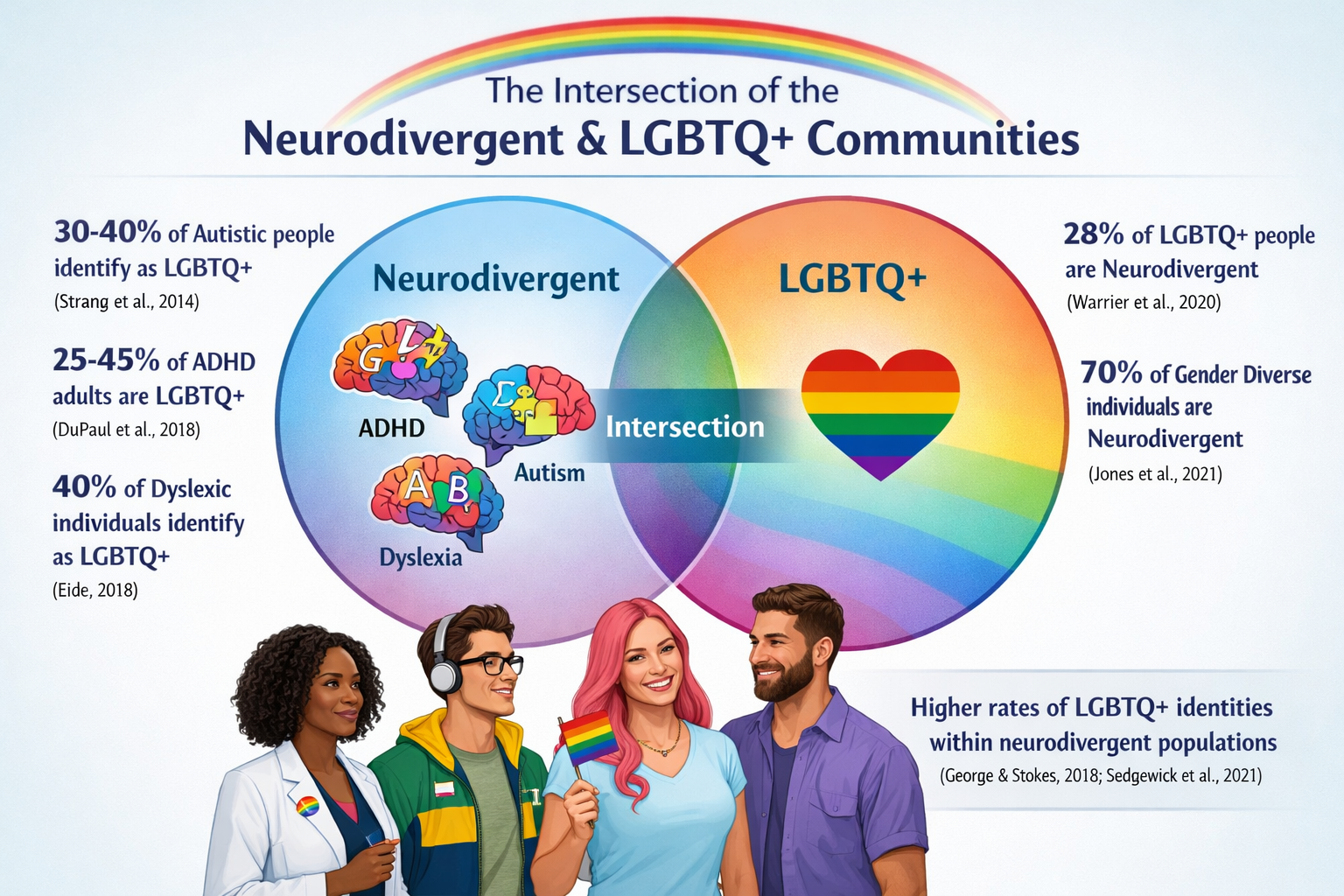
Research on the Connection Between Neurodivergence and Queerness
Scientific research has begun documenting significant overlaps between neurodivergent and LGBTQ+ populations. These findings challenge assumptions about both neurological diversity and sexual/gender identity.
Autism and LGBTQ+ Identity
Studies consistently show higher rates of LGBTQ+ identity among autistic individuals:
- Gender identity: Autistic people are 3-6 times more likely to identify as transgender or non-binary
- Sexual orientation: Higher rates of non-heterosexual orientations in autistic populations
- Self-identification: Increased likelihood of questioning traditional identity categories
ADHD and Queer Identity
Research on ADHD populations reveals similar patterns:
- Gender exploration: Higher rates of gender questioning and transition
- Sexual fluidity: More flexible approaches to sexual orientation
- Identity timing: Often later recognition of both ADHD and queer identity
Ongoing Research
Scientists continue investigating these connections through:
- Large-scale population studies
- Qualitative interviews with individuals
- Longitudinal research tracking identity development
- Cross-cultural comparisons
The research remains evolving, with new studies regularly adding to our understanding of how brain diversity and identity diversity intersect.
Possible Reasons for the Overlap
Several theories attempt to explain why neurodivergence and queerness appear together more frequently than statistical chance would predict.
Differences in Social Norms and Expectations
Neurodivergent individuals often experience social norms differently:
- Reduced social conformity pressure: Less automatic adherence to societal expectations
- Alternative perspective: Different ways of understanding social rules and categories
- Questioning mindset: Natural tendency to examine rather than accept social constructs
Increased Openness to Questioning Identity
The neurodivergent experience may foster identity exploration:
- Self-reflection skills: Practice examining internal experiences
- Comfort with difference: Already navigating being different from the majority
- Analytical thinking: Tendency to examine and categorize personal experiences
Unique Perspectives on Gender and Relationships
Neurodivergent brains might process gender and attraction differently:
- Reduced gender assumptions: Less automatic acceptance of binary gender roles
- Sensory considerations: Physical and emotional attraction influenced by sensory processing
- Logical analysis: Approaching relationships through reasoning rather than social scripts
Reduced Reliance on Traditional Social Scripts
Many neurodivergent people develop alternative approaches to:
- Dating and relationships
- Gender expression
- Social interaction
- Identity development
These alternative approaches often lead to discovering authentic preferences that might differ from societal defaults.
Shared Experiences Between Neurodivergent and Queer Individuals
People who are neurodivergent and/or queer often share common life experiences that create natural understanding and community.
Feeling Different from Societal Expectations
Both groups frequently experience:
- Early awareness of difference: Sensing they don’t fit typical molds
- Masking behaviors: Hiding authentic selves to fit in
- Search for belonging: Looking for communities that accept their true selves
- Identity validation struggles: Needing external confirmation of their experiences
Navigating Identity and Self-Understanding
The journey of self-discovery often includes:
- Extended questioning periods: Taking time to understand personal identity
- Multiple identity labels: Trying different terms to find the right fit
- Evolving understanding: Identity that develops and changes over time
- Intersectional complexity: Managing multiple aspects of identity simultaneously
Experiences with Misunderstanding or Stigma
Unfortunately, both communities face:
- Misconceptions from others: Dealing with stereotypes and assumptions
- Discrimination: Facing prejudice in various life areas
- Healthcare challenges: Finding providers who understand their needs
- Family dynamics: Navigating acceptance within family systems
Learning to manage stress effectively becomes crucial when dealing with these additional life pressures.
Building Supportive Communities
Both groups excel at:
- Creating inclusive spaces
- Developing mutual support networks
- Advocating for acceptance and rights
- Celebrating diversity and authenticity
Challenges at the Intersection of Neurodivergence and Queerness
Individuals who are both neurodivergent and queer face unique challenges that require specialized understanding and support.
Mental Health Challenges
The intersection creates specific mental health risks:
- Double minority stress: Facing discrimination on multiple fronts
- Identity confusion: Sorting through complex, intersecting identities
- Increased anxiety: Managing multiple sources of social stress
- Depression risk: Higher rates due to social isolation and misunderstanding
Emotional brain training techniques can help individuals develop coping strategies for these complex emotional challenges.
Social Isolation
Finding community becomes more complex when needing spaces that understand both aspects of identity:
- Limited inclusive spaces: Few environments welcoming both identities
- Communication barriers: Neurodivergent traits affecting social connection
- Misunderstanding within communities: Even supportive groups may not understand all aspects
- Geographic limitations: Fewer resources in smaller communities
Lack of Inclusive Healthcare
Healthcare systems often struggle to provide appropriate care:
- Provider knowledge gaps: Limited understanding of intersectional needs
- Separate treatment approaches: Addressing neurodivergence and queerness separately
- Accessibility issues: Services not designed for neurodivergent individuals
- Insurance barriers: Coverage limitations for comprehensive care
Difficulty Accessing Appropriate Resources
Finding suitable support requires:
- Specialized knowledge: Providers understanding both areas
- Intersectional approaches: Resources addressing multiple identity aspects
- Accessible formats: Information presented in neurodivergent-friendly ways
- Community connections: Networks that celebrate full identity spectrum
Strengths and Positive Aspects of Identity Diversity
While challenges exist, the intersection of neurodivergence and queerness also creates unique strengths and advantages.
Creativity and Innovative Thinking
The combination often produces:
- Novel problem-solving approaches: Unique perspectives on challenges
- Artistic expression: Creative outlets for complex experiences
- Innovation: Fresh ideas in various fields
- Alternative solutions: Non-traditional approaches to life situations
Strong Authenticity and Self-Awareness
Individuals develop:
- Deep self-knowledge: Understanding personal needs and preferences
- Authentic expression: Comfort being genuinely themselves
- Honest communication: Direct, clear interaction styles
- Value alignment: Living according to personal principles
This authentic self-awareness often helps in overcoming self-doubt that can affect many people navigating identity questions.
Deep Empathy and Community Building
Many individuals excel at:
- Understanding difference: Empathy for others who feel different
- Inclusive leadership: Creating welcoming spaces for diverse people
- Advocacy skills: Fighting for acceptance and rights
- Mentorship: Supporting others on similar journeys
Advocacy for Inclusion and Acceptance
The lived experience of multiple identities creates powerful advocates who:
- Challenge discriminatory systems
- Educate others about diversity
- Create positive change in communities
- Model acceptance and inclusion
Supporting Neurodivergent LGBTQ+ Individuals
Creating truly inclusive environments requires intentional effort and understanding from families, schools, workplaces, and communities.
Creating Inclusive Environments
In Schools:
- Train staff on both neurodiversity and LGBTQ+ issues
- Develop policies protecting multiple identity aspects
- Create safe spaces for identity exploration
- Provide accessible resources and support
In Workplaces:
- Implement comprehensive diversity training
- Establish employee resource groups
- Ensure accommodation processes include identity considerations
- Foster cultures of acceptance and belonging
Encouraging Open Conversations
Supportive dialogue includes:
- Non-judgmental listening: Creating space for identity sharing
- Respectful questioning: Learning without making assumptions
- Validation: Acknowledging the reality of diverse experiences
- Ongoing education: Continuously learning about identity diversity
Improving social skills can help allies become better supporters of neurodivergent LGBTQ+ individuals.
Providing Accessible Mental Health Support
Effective support requires:
- Intersectional training: Therapists understanding multiple identity aspects
- Accessible formats: Services accommodating neurodivergent needs
- Identity-affirming approaches: Celebrating rather than pathologizing differences
- Community connections: Linking individuals with supportive networks
Building Communities That Respect Diversity
Strong communities feature:
- Multiple identity celebration: Honoring all aspects of individuals
- Accessible participation: Removing barriers to involvement
- Peer support networks: Connecting people with similar experiences
- Educational opportunities: Learning about diversity and inclusion
Conclusion
The intersection of neurodivergence and queerness represents a fascinating area of human diversity that challenges traditional understanding of both brain differences and identity development. As research continues to document higher rates of LGBTQ+ identity among neurodivergent populations, society must evolve to better support individuals navigating multiple aspects of their authentic selves.
Understanding this overlap helps create more inclusive communities, better healthcare systems, and stronger support networks. The challenges faced by neurodivergent LGBTQ+ individuals – from mental health struggles to social isolation – require specialized attention and intersectional approaches.
Yet the strengths that emerge from this intersection are equally remarkable. The creativity, authenticity, empathy, and advocacy skills developed by individuals managing multiple identities contribute significantly to social progress and community building.
Moving forward, the key lies in continued education, research, and community building. By recognizing both the challenges and strengths associated with neurodivergence and queerness, society can work toward full acceptance and celebration of human diversity in all its forms.
Next Steps:
- Seek out educational resources about both neurodiversity and LGBTQ+ issues
- Support organizations working at the intersection of these identities
- Advocate for inclusive policies in your workplace, school, or community
- Practice inclusive language and behaviors in daily interactions
- Connect with or create supportive communities that celebrate identity diversity


