
In 2026, one in five people experiences some form of neurodivergence, yet many still struggle to understand what this means for themselves or their loved ones. Whether you’re seeking answers for persistent learning challenges, wondering about attention difficulties, or simply trying to understand neurological differences better, having a comprehensive list of neurodivergence can provide crucial clarity and validation.
Neurodivergence encompasses a wide range of neurological variations that affect how people think, learn, process information, and interact with the world. Far from being limitations, these differences often come with unique strengths and perspectives that contribute valuable diversity to our communities.
This guide explores the most common types of neurodivergent conditions, their key characteristics, and what they mean for daily life. Understanding these differences helps reduce stigma, promotes acceptance, and empowers individuals to seek appropriate support when needed.
Key Takeaways
• Neurodivergence includes conditions like ADHD, autism, dyslexia, dyspraxia, dyscalculia, Tourette’s syndrome, and OCD that affect brain function and processing
• Each neurodivergent condition has distinct characteristics but may share common traits like sensory sensitivities and executive function differences
• Neurodivergent individuals often possess unique strengths including creativity, pattern recognition, and innovative problem-solving abilities
• Professional evaluation can provide valuable insights for those experiencing persistent challenges with learning, attention, or sensory processing
• Understanding neurodivergence promotes inclusion and helps create supportive environments where everyone can thrive
What Is Neurodivergence?
Neurodivergence refers to natural variations in brain function and neurological development that cause people to think, learn, and process information differently from what’s considered typical. The term encompasses a range of conditions that affect cognitive, social, learning, and behavioral functioning.
The concept of neurodiversity recognizes these differences as natural variations in human neurology rather than deficits or disorders. This perspective emphasizes that neurological differences are simply part of human diversity, similar to variations in height, eye color, or personality traits.
Understanding the Spectrum
Neurodivergence exists on a spectrum, meaning:
- Symptoms and traits vary significantly between individuals
- The same person may have strengths in some areas and challenges in others
- Support needs can range from minimal to substantial
- Many people have multiple neurodivergent conditions simultaneously
The key distinction lies between neurodivergent individuals (those with neurological differences) and neurotypical individuals (those whose brain function aligns with societal expectations and norms).
For those seeking to better understand their own neurological patterns, exploring cognitive brain training techniques can provide insights into how different brains process information.
List of Common Neurodivergent Conditions
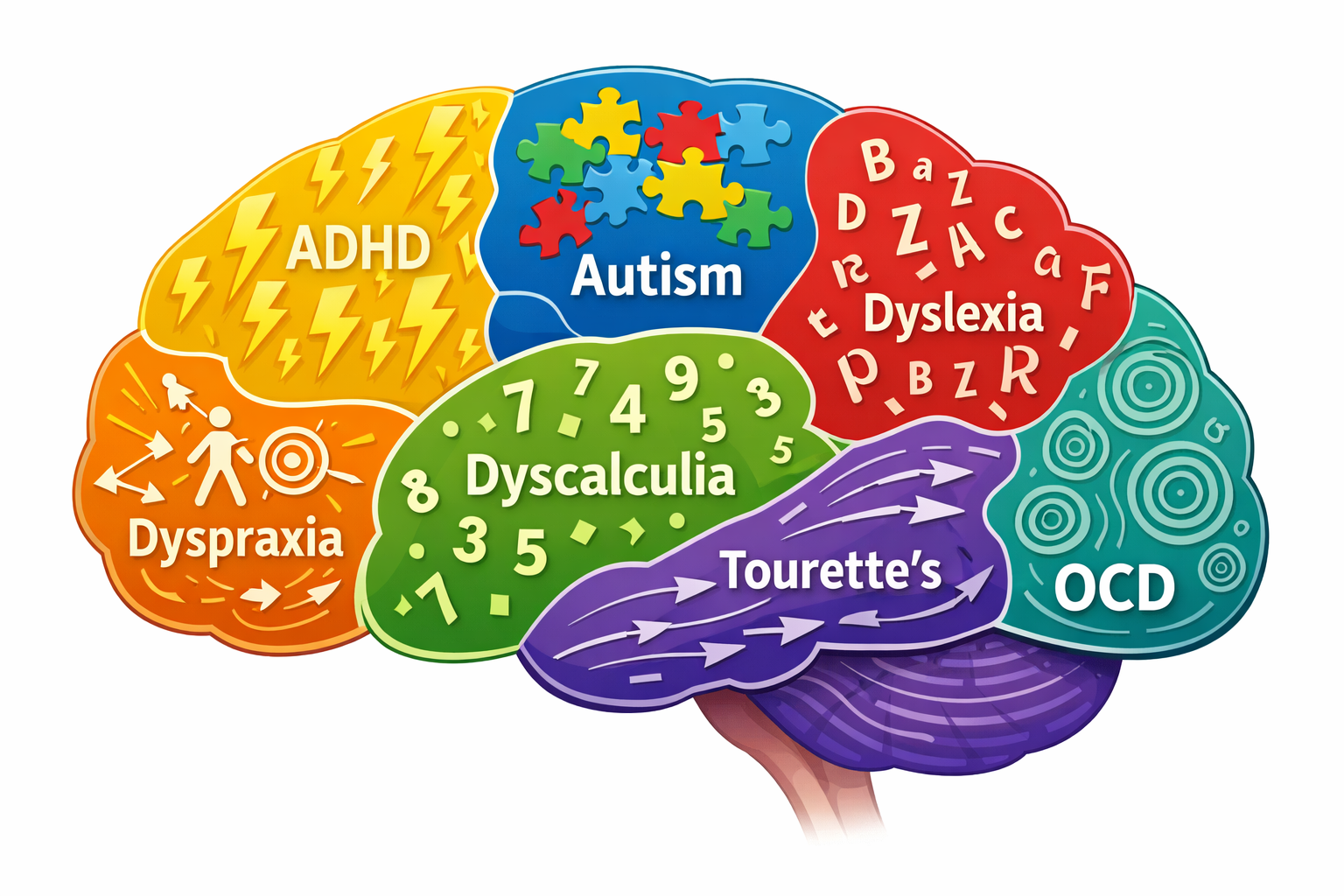
This comprehensive list of neurodivergence covers the most frequently recognized conditions that affect millions of people worldwide. Each condition presents unique characteristics and challenges, but also distinct strengths and abilities.
ADHD (Attention-Deficit/Hyperactivity Disorder)
ADHD affects approximately 5-10% of children and 2-5% of adults globally. It involves differences in brain development and activity that impact attention, impulse control, and activity levels.
Key characteristics include:
- 🎯 Inattention: Difficulty sustaining focus, easily distracted, forgetful
- ⚡ Hyperactivity: Restlessness, fidgeting, difficulty sitting still
- 🚀 Impulsivity: Acting without thinking, interrupting others, impatience
Common strengths:
- High creativity and innovation
- Ability to hyperfocus on interesting tasks
- Quick thinking and adaptability
- High energy for passionate projects
Autism Spectrum Disorder (ASD)
Autism is a developmental condition affecting communication, social interaction, and behavior patterns. The “spectrum” nature means symptoms vary widely between individuals.
Core features include:
- 💬 Social communication differences: Challenges with nonverbal communication, developing relationships, and social reciprocity
- 🔄 Repetitive behaviors: Repetitive movements, adherence to routines, highly focused interests
- 🎭 Sensory sensitivities: Over- or under-responsiveness to sensory input
Notable strengths:
- Exceptional attention to detail
- Strong pattern recognition abilities
- Deep expertise in areas of interest
- Honest and direct communication style
Dyslexia
Dyslexia is a learning difference that primarily affects reading, writing, and language processing. It’s the most common learning disability, affecting 10-15% of the population.
Primary challenges:
- 📚 Difficulty with phonological processing
- 🔤 Problems with word recognition and spelling
- 📖 Slow reading speed despite normal intelligence
- ✍️ Challenges with written expression
Associated strengths:
- Strong visual-spatial reasoning
- Creative problem-solving abilities
- Big-picture thinking
- Entrepreneurial skills
Dyspraxia (Developmental Coordination Disorder)
Dyspraxia affects movement coordination and spatial awareness, impacting both fine and gross motor skills.
Common symptoms:
- 🤹 Poor coordination and balance
- ✂️ Difficulty with fine motor tasks (writing, tying shoes)
- 🗺️ Problems with spatial awareness and navigation
- 📝 Challenges with planning and organizing movements
Potential strengths:
- Strong verbal communication skills
- Creative and artistic abilities
- Empathy and emotional intelligence
- Determination and persistence
Dyscalculia
Dyscalculia is a learning difference that affects number sense, mathematical reasoning, and arithmetic skills.
Key indicators:
- 🔢 Difficulty understanding number concepts
- ➕ Problems with basic arithmetic operations
- 🕐 Challenges with time and money concepts
- 📊 Trouble with mathematical word problems
Compensatory strengths:
- Strong language and reading abilities
- Creative and artistic talents
- Good intuitive reasoning
- Strong social skills
Tourette’s Syndrome
Tourette’s syndrome is a neurological condition characterized by repetitive, involuntary movements and vocalizations called tics.
Characteristics include:
- 🎭 Motor tics (eye blinking, head jerking, shoulder shrugging)
- 🗣️ Vocal tics (throat clearing, grunting, words or phrases)
- 🌊 Tics that wax and wane in frequency and intensity
- 🧠 Often accompanied by other conditions like ADHD or OCD
Associated abilities:
- Enhanced creativity and artistic expression
- High energy and enthusiasm
- Quick reflexes and motor skills
- Strong determination and resilience
Obsessive-Compulsive Disorder (OCD)
OCD involves persistent, intrusive thoughts (obsessions) and repetitive behaviors or mental acts (compulsions) performed to reduce anxiety.
Main features:
- 💭 Unwanted, distressing thoughts or images
- 🔄 Repetitive behaviors or mental rituals
- ⏰ Significant time spent on obsessions and compulsions
- 😰 Distress and interference with daily functioning
Potential strengths:
- Exceptional attention to detail
- High standards and quality focus
- Strong analytical abilities
- Dedication and thoroughness
Other Conditions Sometimes Included in Neurodivergence
While the above conditions form the core list of neurodivergence, several other neurological differences are sometimes included:
Auditory Processing Disorder (APD)
Difficulty processing and interpreting auditory information despite normal hearing.
Sensory Processing Disorder (SPD)
Challenges with receiving and responding to sensory information from the environment.
Nonverbal Learning Disorder (NVLD)
Difficulties with visual-spatial processing, motor coordination, and social skills while maintaining strong verbal abilities.
Hyperlexia
Advanced reading ability that develops early, often accompanied by challenges in language comprehension and social communication.
Synesthesia
A neurological trait where stimulation of one sensory pathway leads to automatic experiences in another sensory pathway.
Traits That Neurodivergent People May Share
Despite the diversity within this list of neurodivergence, many neurodivergent individuals share certain common experiences:
Different Attention Patterns
- Difficulty with sustained attention on uninteresting tasks
- Ability to hyperfocus on engaging activities
- Challenges with attention switching and multitasking
Sensory Sensitivities
- Over-responsiveness to sounds, lights, textures, or smells
- Under-responsiveness requiring more sensory input
- Sensory-seeking or sensory-avoiding behaviors
Executive Function Challenges
- Difficulty with planning and organization
- Problems with time management and prioritization
- Challenges with working memory and task initiation
Understanding these patterns can benefit from developing effective stress management techniques and improving social skills that accommodate neurodivergent processing styles.
Unique Problem-Solving Approaches
- Thinking outside conventional frameworks
- Approaching challenges from unexpected angles
- Innovative solutions to complex problems
Strong Focus on Specific Interests
- Deep, passionate engagement with preferred topics
- Extensive knowledge in areas of interest
- Motivation driven by intrinsic rather than extrinsic factors
Strengths Often Associated With Neurodivergence
Rather than focusing solely on challenges, it’s crucial to recognize the significant strengths that often accompany neurodivergent conditions:
Creativity and Innovation 💡
Neurodivergent individuals frequently demonstrate:
- Original thinking and creative problem-solving
- Artistic and musical talents
- Innovative approaches to challenges
- Ability to see connections others miss
Pattern Recognition 🔍
Many neurodivergent people excel at:
- Identifying patterns in complex data
- Recognizing inconsistencies and errors
- Systematic thinking and analysis
- Attention to detail and accuracy
Deep Concentration 🎯
When engaged with interesting material:
- Sustained focus for extended periods
- Thorough exploration of topics
- Persistence through challenges
- High-quality output in areas of strength
Unique Perspectives 🌟
Neurodivergent thinking contributes:
- Fresh viewpoints on old problems
- Questioning of assumptions and conventions
- Diverse approaches to teamwork and collaboration
- Valuable insights from different cognitive styles
These strengths align well with approaches found in holistic life coaching, which recognizes and builds upon individual differences and natural abilities.
Why Understanding Neurodivergence Matters
Comprehensive awareness of this list of neurodivergence serves multiple important purposes in 2026:
Reducing Stigma and Misconceptions
- Promotes acceptance of neurological differences
- Challenges stereotypes and negative assumptions
- Encourages inclusive language and attitudes
- Supports neurodivergent individuals in self-advocacy
Creating Supportive Environments
- Enables accommodations in educational settings
- Improves workplace inclusivity and productivity
- Enhances family understanding and support
- Facilitates appropriate therapeutic interventions
Personal Understanding and Growth
- Helps individuals recognize their own patterns
- Validates experiences and reduces self-blame
- Guides decisions about seeking professional support
- Empowers people to leverage their strengths
The importance of active listening becomes particularly relevant when supporting neurodivergent individuals, as their communication styles and needs may differ from neurotypical expectations.
When Someone Might Seek an Evaluation
Recognition of patterns from this list of neurodivergence may prompt individuals to seek professional assessment:
Persistent Learning Challenges
- Ongoing difficulties despite adequate instruction
- Significant gaps between ability and achievement
- Struggles that impact academic or work performance
- Learning differences that affect daily functioning
Attention or Focus Difficulties
- Chronic problems with concentration and focus
- Challenges with task completion and organization
- Impulsivity that interferes with relationships or responsibilities
- Hyperactivity that impacts daily activities
Sensory Sensitivities Affecting Daily Life
- Over-responsiveness to environmental stimuli
- Sensory-seeking behaviors that seem excessive
- Avoidance of certain textures, sounds, or situations
- Sensory issues that limit participation in activities
Benefits of Professional Assessment
Professional evaluation can provide:
- Accurate diagnosis and understanding of specific conditions
- Personalized recommendations for accommodations and support
- Access to services and therapeutic interventions
- Validation and relief from finally understanding lifelong challenges
For those experiencing significant stress related to these challenges, learning about self-care strategies can provide additional support during the evaluation process.
Conclusion
This comprehensive list of neurodivergence demonstrates the rich diversity of human neurological functioning. From ADHD and autism to dyslexia, dyspraxia, dyscalculia, Tourette’s syndrome, and OCD, each condition represents a unique way of experiencing and interacting with the world.
Understanding these differences matters because neurodivergence is not about deficits or limitations—it’s about recognizing the natural variations in how human brains develop and function. Many neurodivergent individuals possess remarkable strengths, including creativity, pattern recognition, deep focus abilities, and innovative problem-solving skills that benefit our communities and workplaces.
Key action steps for moving forward:
- Educate yourself and others about neurodivergent conditions to reduce stigma and promote acceptance
- Recognize potential signs in yourself or loved ones and consider professional evaluation when appropriate
- Advocate for inclusive environments in schools, workplaces, and communities that accommodate different learning and processing styles
- Focus on strengths while providing appropriate support for challenges
- Connect with resources and communities that understand and support neurodivergent experiences
Whether you’re neurodivergent yourself, supporting someone who is, or simply seeking to understand these differences better, remember that neurodiversity enriches our world. By embracing and accommodating these natural variations in human neurology, we create more inclusive communities where everyone can thrive and contribute their unique gifts.
The journey of understanding neurodivergence is ongoing, but with greater awareness, acceptance, and support, 2026 represents a time of unprecedented opportunity for neurodivergent individuals to flourish and for society to benefit from their distinctive perspectives and abilities.


