
Have you ever felt completely consumed by thoughts of someone you’re attracted to? 💭 When every text message sends your heart racing, and their absence feels physically painful? This intense romantic fixation, known as limerence, can feel overwhelming for anyone. But for neurodivergent individuals, these experiences often become even more intense and persistent. The connection between Limerence and Neurodivergence is becoming increasingly recognized as researchers explore how different brain wiring affects our romantic experiences.
Understanding this relationship isn’t just academic curiosity—it’s essential for millions of people who find themselves caught in cycles of intense romantic obsession. Whether you’re neurodivergent yourself or supporting someone who is, recognizing these patterns can lead to healthier relationships and greater self-compassion.
Key Takeaways
- Limerence is an intense form of romantic obsession characterized by intrusive thoughts, emotional dependency, and desperate need for reciprocation
- Neurodivergent brains process emotions and attention differently, making limerence more likely and intense
- Hyperfocus, emotional sensitivity, and social communication differences all contribute to heightened romantic fixation
- Understanding these patterns helps reduce shame and develop healthier coping strategies
- Professional support and self-awareness are key to managing distressing limerent episodes
What Is Limerence?
Limerence is a term coined by psychologist Dorothy Tennov in the 1970s to describe an intense, obsessive form of romantic attraction. Unlike typical crushes or even deep love, limerence involves a complete preoccupation with another person that can dominate your thoughts and emotions for months or even years.
Common Characteristics of Limerence
People experiencing limerence typically show these patterns:
- Intrusive thoughts about the object of their affection that are difficult to control
- Emotional highs and lows based entirely on the other person’s responses
- Desperate need for reciprocation and constant analysis of their behavior for signs of interest
- Physical symptoms like racing heart, sweating, or stomach butterflies when thinking about them
- Idealization of the person, often ignoring red flags or incompatibilities
- Fear of rejection so intense it can be paralyzing
How Limerence Differs from Love
While love involves care, respect, and genuine concern for another person’s wellbeing, limerence is primarily focused on your own emotional needs. Love grows stronger with mutual understanding and shared experiences. Limerence, however, often thrives on uncertainty and can actually decrease when the relationship becomes secure and predictable.
“Limerence is not love. It’s an addiction to the feeling of being in love, often with someone who may not even know you exist.” – Relationship Psychology Research
What Is Neurodivergence?
Neurodivergence refers to natural variations in how brains function and process information. Rather than viewing these differences as disorders, the neurodiversity movement recognizes them as normal variations in human cognition.
Common Neurodivergent Conditions
Several conditions fall under the neurodivergent umbrella:
| Condition | Key Characteristics |
|---|---|
| ADHD | Attention differences, hyperactivity, impulsivity |
| Autism | Social communication differences, sensory sensitivities |
| OCD | Intrusive thoughts, compulsive behaviors |
| Dyslexia | Reading and language processing differences |
| Anxiety Disorders | Heightened worry and stress responses |
Each of these conditions involves unique patterns of thinking, feeling, and processing information that can significantly impact romantic experiences.
The Connection Between Limerence and Neurodivergence
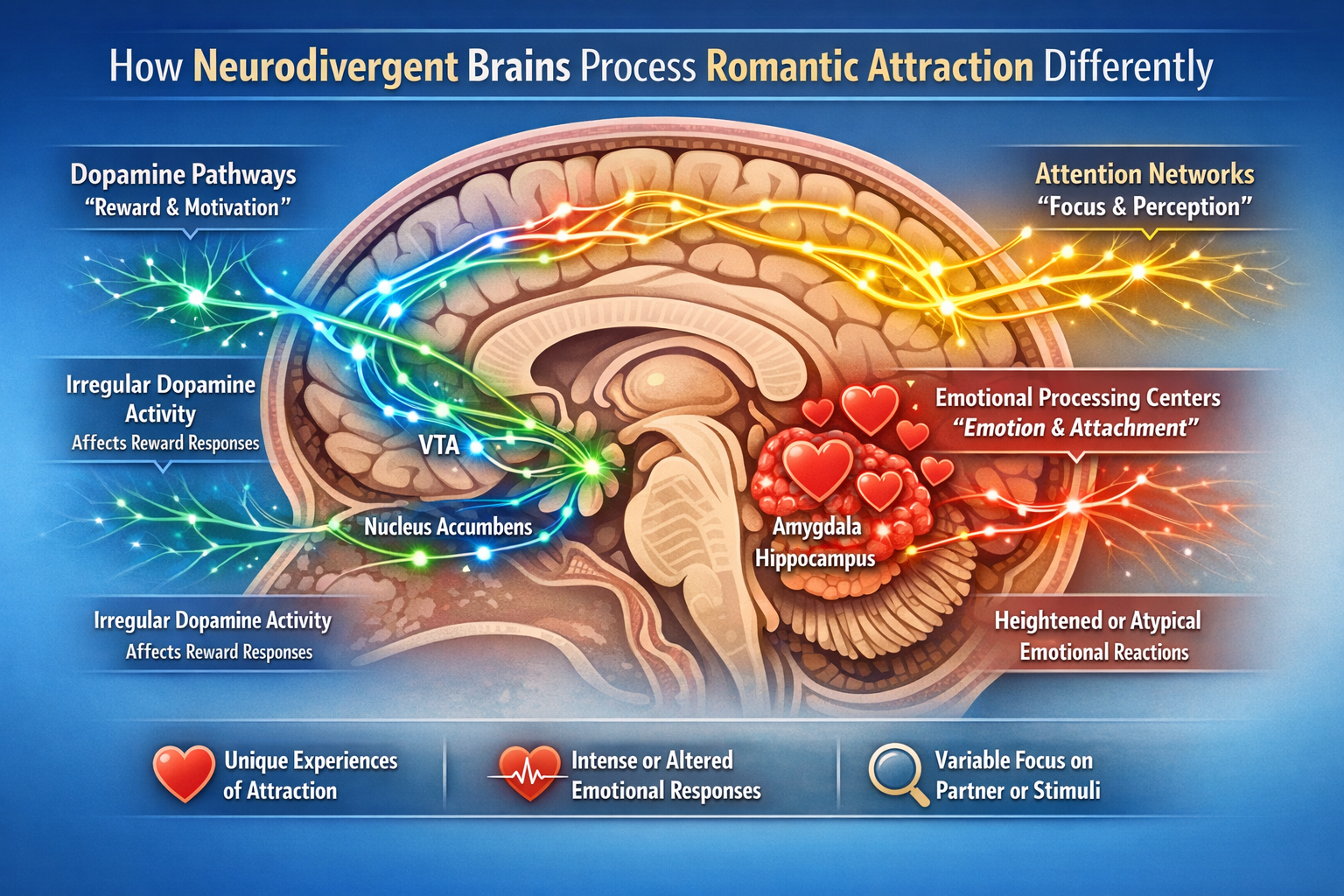
Research increasingly suggests that neurodivergent individuals may be more susceptible to limerence due to several key factors in how their brains process emotions, attention, and social information.
Dopamine Regulation Differences
Many neurodivergent conditions involve differences in dopamine regulation—the brain chemical responsible for motivation, reward, and pleasure. When someone with ADHD or autism experiences romantic interest, their brain may produce intense dopamine surges that create powerful feelings of euphoria and craving.
This can lead to:
- Addiction-like responses to romantic interactions
- Withdrawal symptoms when the person is unavailable
- Difficulty moderating emotional responses to romantic stimuli
For those struggling with these intense neurochemical responses, managing brain chemicals for happiness becomes crucial for emotional wellbeing.
Hyperfocus and Romantic Obsession
Hyperfocus is a common trait in ADHD and autism where individuals become intensely absorbed in activities or interests. When this hyperfocus turns toward a romantic interest, it can create the perfect conditions for limerence.
Hyperfocus in romantic contexts might look like:
- Spending hours analyzing text messages for hidden meanings
- Researching everything about the person online
- Replaying conversations obsessively
- Creating elaborate fantasies about future relationships
Learning how to be more focused can help redirect this intense attention toward healthier activities.
Emotional Intensity and Sensitivity
Many neurodivergent individuals experience emotions more intensely than neurotypical people. This emotional sensitivity can make romantic feelings feel overwhelming and all-consuming.
Rejection Sensitive Dysphoria (RSD), common in ADHD, makes perceived rejection feel like physical pain. When combined with limerence, even minor signs of disinterest can trigger devastating emotional crashes.
Social Communication and Misunderstanding
Neurodivergent individuals often process social cues differently, which can fuel limerent obsessions. Ambiguous social signals that neurotypical people might dismiss can become the foundation for elaborate romantic fantasies.
Common patterns include:
- Misreading politeness as romantic interest
- Overanalyzing neutral interactions for hidden meanings
- Difficulty understanding when interest isn’t reciprocated
- Building entire narratives around minimal contact
These communication differences can make it challenging to accurately assess relationship potential, leading to prolonged periods of unrequited limerence. Developing better social skills can help create more realistic expectations in romantic situations.
When Limerence Becomes Distressing
While intense romantic feelings are normal, limerence becomes problematic when it significantly impacts daily functioning and wellbeing.
Warning Signs to Watch For
- Persistent intrusive thoughts that interfere with work, school, or relationships
- Emotional dependency on another person’s responses for your mood
- Neglecting responsibilities to focus on the object of limerence
- Physical symptoms like insomnia, loss of appetite, or panic attacks
- Social isolation from friends and family
- Inability to form other relationships due to obsessive focus
When limerence reaches this level, it’s important to seek support. Professional mental health resources can provide valuable tools for managing these intense experiences.
Healthy Ways to Manage Limerence
Understanding the connection between Limerence and Neurodivergence is the first step toward developing healthier romantic patterns. Here are evidence-based strategies that can help:
Developing Self-Awareness
- Track emotional patterns to identify limerence triggers
- Practice mindfulness to observe thoughts without judgment
- Journal about feelings to gain perspective on romantic obsessions
Mindfulness tools for inner peace can be particularly helpful for developing this awareness.
Redirecting Hyperfocus
- Channel intense attention into meaningful hobbies or goals
- Set time limits for thinking about romantic interests
- Engage in absorbing activities that naturally capture attention
Building Emotional Regulation Skills
- Learn grounding techniques for managing overwhelming feelings
- Practice distress tolerance skills from therapies like DBT
- Develop healthy coping mechanisms instead of rumination
For those dealing with persistent overthinking patterns, learning how to stop overthinking and start living can provide practical strategies.
Creating Balanced Relationships
- Maintain friendships and family connections outside of romantic interests
- Set healthy boundaries around contact and communication
- Focus on reciprocal relationships where interest is mutual
Self-Compassion for Neurodivergent Experiences
Perhaps most importantly, it’s crucial to approach limerent experiences with self-compassion rather than shame. Neurodivergent brains are wired differently, and intense romantic feelings are often a natural result of this wiring—not a character flaw.
Reframing Limerent Experiences
Instead of viewing limerence as weakness or pathology, consider it as:
- Evidence of your capacity for deep feeling
- A signal that you might need better emotional support systems
- An opportunity to learn more about your romantic needs
- A chance to develop stronger self-awareness
Learning to love yourself again is often essential for breaking cycles of unhealthy romantic obsession.
Building Self-Worth Independent of Romance
Developing a strong sense of self-worth that doesn’t depend on romantic validation is crucial for neurodivergent individuals prone to limerence. This might involve:
- Pursuing personal interests and goals unrelated to romance
- Celebrating neurodivergent strengths like creativity, empathy, or unique perspectives
- Building supportive communities with other neurodivergent individuals
- Working with therapists who understand neurodivergence
Professional Support Options
When limerence significantly impacts your life, professional support can be invaluable. Several therapeutic approaches have shown promise:
Therapy Approaches for Limerence
- Cognitive Behavioral Therapy (CBT) helps identify and change thought patterns
- Dialectical Behavior Therapy (DBT) teaches emotional regulation skills
- Acceptance and Commitment Therapy (ACT) focuses on psychological flexibility
- ADHD/Autism-informed therapy addresses neurodivergent-specific challenges
Some individuals also find Neuro Linguistic Programming helpful for changing thought patterns around romantic obsession.
Building Healthier Romantic Connections
The goal isn’t to eliminate the capacity for deep romantic feeling—which can be a beautiful aspect of neurodivergent experience—but rather to channel it in healthier directions.
Strategies for Balanced Romance
- Take relationships slowly to avoid intensity buildup
- Communicate openly about your emotional needs and patterns
- Seek partners who appreciate neurodivergent traits
- Maintain individual identity within romantic relationships
- Practice vulnerability in safe, reciprocal relationships
For those still searching for meaningful connections, understanding why you haven’t found your soulmate might provide valuable insights.
Conclusion
The relationship between Limerence and Neurodivergence reveals important truths about how different brains experience romantic attraction. While neurodivergent individuals may be more prone to intense romantic fixation due to differences in dopamine regulation, hyperfocus tendencies, and emotional processing, this doesn’t mean they’re destined for unhealthy relationships.
Understanding these patterns is the first step toward developing healthier romantic connections. By recognizing the neurobiological roots of limerence, practicing self-compassion, and developing effective coping strategies, neurodivergent individuals can harness their capacity for deep feeling while maintaining emotional wellbeing.
Take action today by:
- 🧠 Reflecting on your own romantic patterns and triggers
- 💝 Practicing self-compassion for intense emotional experiences
- 🎯 Redirecting hyperfocus toward personal growth and meaningful activities
- 🤝 Seeking professional support if limerence significantly impacts your life
- 🌱 Building a strong sense of self-worth independent of romantic validation
Remember: your neurodivergent brain isn’t broken—it’s simply wired differently. With understanding and the right tools, you can create the healthy, fulfilling romantic connections you deserve.


