
In 2026, conversations about neurodiversity have become more prominent than ever, yet many people still wonder: is neurodivergence the same as autism? This confusion is understandable, given how these terms are often used interchangeably in media and casual conversation. However, understanding the distinction between these concepts is crucial for anyone navigating neurodivergence in their personal or professional life.
The relationship between neurodivergence and autism is like comparing a large umbrella to one of the items it covers. While autism is indeed a form of neurodivergence, neurodivergence encompasses a much broader spectrum of neurological differences that affect how people think, learn, and process information.
Key Takeaways
• Neurodivergence is an umbrella term that includes autism, ADHD, dyslexia, and other neurological differences
• Autism is one specific type of neurodivergence with its own unique characteristics and traits
• Understanding these differences helps reduce stigma and promotes better support systems
• Both concepts emphasize that neurological differences are natural variations, not disorders to be “fixed”
• Proper identification of specific neurodivergent conditions leads to more effective accommodations and support
What Is Neurodivergence? A Comprehensive Overview
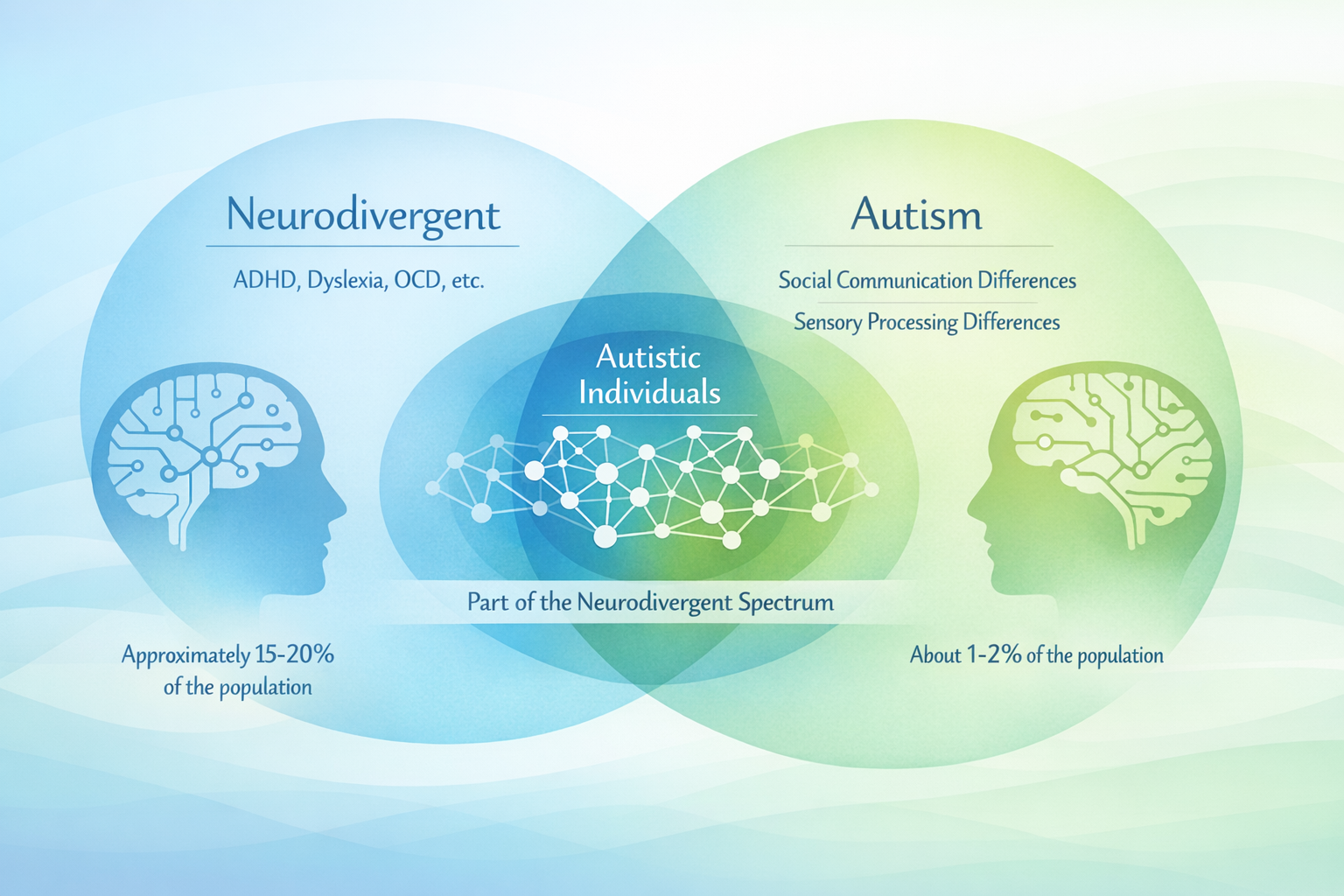
Neurodivergence refers to natural variations in brain function and behavioral traits that differ from what society considers “typical” or neurotypical. This concept emerged from the neurodiversity movement, which advocates for recognizing neurological differences as natural human variations rather than deficits or disorders.
The term encompasses a wide range of conditions, including:
- Autism Spectrum Disorder (ASD)
- Attention Deficit Hyperactivity Disorder (ADHD)
- Dyslexia and other learning differences
- Obsessive-Compulsive Disorder (OCD)
- Tourette Syndrome
- Bipolar Disorder
- Anxiety disorders
The Neurodiversity Movement 🧠
The neurodiversity movement, pioneered by autistic advocates in the 1990s, challenges the medical model that views these differences as pathologies. Instead, it promotes the idea that neurological diversity is as natural and valuable as any other form of human diversity.
This perspective has revolutionized how we approach emotional brain training that makes a difference, emphasizing strengths-based approaches rather than deficit-focused interventions.
“Neurodiversity is not about being different for the sake of being different. It’s about recognizing that different minds bring different strengths to our communities and workplaces.”
Understanding Autism: More Than Just One Part of Neurodivergence
Autism Spectrum Disorder (ASD) is a specific neurodevelopmental condition characterized by differences in social communication, interaction patterns, and the presence of restricted or repetitive behaviors and interests. The term “spectrum” reflects the wide range of experiences and support needs among autistic individuals.
Core Characteristics of Autism
Autism typically involves differences in several key areas:
Social Communication and Interaction:
- Challenges with nonverbal communication
- Difficulty developing and maintaining relationships
- Differences in social-emotional reciprocity
Restricted and Repetitive Patterns:
- Repetitive motor movements or speech
- Strong adherence to routines
- Highly focused special interests
- Sensory sensitivities or differences
Autism Strengths and Abilities ✨
Many autistic individuals possess remarkable strengths, including:
- Attention to detail and pattern recognition
- Deep expertise in areas of interest
- Logical and systematic thinking
- Honesty and direct communication
- Strong sense of justice and fairness
Understanding these strengths is essential for developing self-confidence skills in autistic individuals and creating supportive environments.
Is Neurodivergence the Same as Autism? Breaking Down the Differences
The simple answer is no – neurodivergence and autism are not the same thing. Here’s why this distinction matters:
The Umbrella Analogy
Think of neurodivergence as a large umbrella that covers many different neurological variations. Autism is one important spoke under this umbrella, alongside ADHD, dyslexia, and other conditions. Each condition has its own unique characteristics, support needs, and strengths.
| Neurodivergence | Autism |
|---|---|
| Umbrella term for all neurological differences | Specific neurodevelopmental condition |
| Includes ADHD, dyslexia, OCD, autism, and more | Characterized by social communication differences and repetitive behaviors |
| Broad advocacy movement | Specific community with unique needs |
| General accommodations may vary widely | Specific accommodations often needed |
Why the Confusion Exists
Several factors contribute to the confusion about whether neurodivergence and autism are the same:
- Media representation often focuses primarily on autism when discussing neurodiversity
- Historical context – autism advocacy helped launch the broader neurodiversity movement
- Overlapping traits between different neurodivergent conditions
- Lack of education about the full spectrum of neurodivergence
This confusion can impact social skills development and create barriers to understanding individual needs.
Common Neurodivergent Conditions Beyond Autism
Understanding the full scope of neurodivergence helps clarify why is neurodivergence the same as autism isn’t the right question. Instead, we should ask: “How does autism fit within the broader neurodivergent community?”
ADHD (Attention Deficit Hyperactivity Disorder)
ADHD affects attention, hyperactivity, and impulse control. Key characteristics include:
- Difficulty sustaining attention
- Hyperactivity or restlessness
- Impulsive decision-making
- Executive function challenges
Dyslexia and Learning Differences
Dyslexia primarily affects reading and language processing, while other learning differences may impact:
- Mathematical reasoning (dyscalculia)
- Written expression (dysgraphia)
- Motor coordination (dyspraxia)
Other Neurodivergent Conditions
- OCD: Intrusive thoughts and compulsive behaviors
- Tourette Syndrome: Involuntary tics and vocalizations
- Anxiety Disorders: Persistent worry and fear responses
Each condition requires different approaches to support and accommodation, highlighting why understanding cognitive bias and avoiding generalizations is crucial.
Overlapping Traits and Co-occurring Conditions
While autism is distinct from other neurodivergent conditions, there’s often significant overlap in traits and experiences. Many individuals are multiply neurodivergent, meaning they have more than one neurodivergent condition.
Common Overlapping Areas
Executive Function Challenges:
- Difficulty with planning and organization
- Time management struggles
- Working memory issues
Sensory Processing Differences:
- Over- or under-responsiveness to sensory input
- Seeking or avoiding certain textures, sounds, or lights
- Sensory overwhelm in busy environments
Social Communication Variations:
- Different communication styles
- Challenges reading nonverbal cues
- Preference for direct communication
Co-occurring Conditions
Research shows that autism frequently co-occurs with:
- ADHD (30-50% of autistic individuals)
- Anxiety disorders (up to 40%)
- Depression (particularly in adolescents and adults)
- Learning differences (25-30%)
This complexity underscores why self-awareness development is essential for understanding one’s unique neurodivergent profile.
The Importance of Accurate Understanding and Support
Recognizing that is neurodivergence the same as autism requires a nuanced answer has practical implications for support, accommodations, and advocacy.
Individual Support Needs
Each neurodivergent person has unique strengths and challenges that require personalized approaches:
For Autistic Individuals:
- Sensory accommodations
- Clear communication and expectations
- Structured environments
- Support for social interactions
For Individuals with ADHD:
- Movement breaks and fidget tools
- Organizational systems
- Reduced distractions
- Flexible deadlines
For Those with Learning Differences:
- Alternative learning formats
- Assistive technology
- Extended time for tasks
- Multi-sensory instruction
Building Inclusive Communities
Understanding neurodivergent diversity helps create more inclusive environments by:
- Recognizing multiple ways of thinking and learning
- Providing varied accommodation options
- Celebrating different strengths and perspectives
- Reducing stigma through education
This inclusive approach supports positive mindset development and helps all individuals thrive.
Practical Tips for Supporting Neurodivergent Individuals
Whether someone is autistic, has ADHD, or experiences other forms of neurodivergence, certain strategies can help create supportive environments:
Universal Design Principles 🏗️
- Clear communication with specific, concrete language
- Flexible options for completing tasks or participating
- Sensory considerations in environment design
- Predictable routines with advance notice of changes
Workplace Accommodations
- Quiet spaces for focused work
- Flexible scheduling options
- Written instructions and expectations
- Regular check-ins and feedback
Educational Support
- Multiple ways to demonstrate knowledge
- Assistive technology access
- Collaborative learning opportunities
- Strength-based approaches
These strategies align with brain training approaches that emphasize working with natural brain differences rather than against them.
Conclusion
Understanding that is neurodivergence the same as autism reveals a complex but important distinction is crucial for anyone navigating neurodivergent experiences in 2026. While autism is a significant and important part of the neurodivergent community, it represents just one of many neurological variations that make up human neurodiversity.
Recognizing this distinction helps us:
- Provide more accurate support tailored to individual needs
- Reduce misconceptions that limit understanding
- Celebrate the full spectrum of neurodivergent experiences
- Build truly inclusive communities that value all types of minds
Next Steps for Your Journey
If you’re exploring neurodivergence in your own life or supporting someone who is:
- Seek professional evaluation if you suspect specific conditions
- Connect with neurodivergent communities for support and resources
- Advocate for accommodations that meet individual needs
- Continue learning about the diverse experiences within neurodivergence
- Practice self-compassion as you navigate this understanding
Remember, whether someone is autistic, has ADHD, or experiences other forms of neurodivergence, each person deserves respect, understanding, and support that honors their unique neurological makeup. The goal isn’t to fit everyone into the same box, but to create a world where different types of minds can flourish.


