
Neuroscientists have discovered that people who regularly practice visualization show measurable changes in brain activity within just eight weeks, with enhanced neural pathways in areas responsible for attention and goal-directed behavior. This finding challenges the common dismissal of manifestation as mere wishful thinking and reveals the sophisticated psychological mechanisms that explain how manifesting works in the real world.
While manifestation has gained popularity in self-improvement circles, many people misunderstand it as magical thinking or passive hoping. The reality is far more practical and grounded in established psychological principles. Understanding how manifesting works involves examining the interplay between mindset, focused attention, emotional conditioning, behavioral patterns, and consistent action.
This article explores the science-backed psychology behind manifestation, revealing why certain techniques can genuinely influence life outcomes when applied correctly. Rather than promoting unrealistic expectations, we’ll examine the practical insights that make manifestation a valuable tool for personal growth and goal achievement.
Key Takeaways
• Manifestation operates through psychological mechanisms like the reticular activating system, which filters information based on your priorities and beliefs
• Successful manifesting requires both mental practices and real-world action – thoughts alone cannot create results without corresponding behaviors
• Emotional alignment and consistent habits are more important than positive thinking alone for achieving meaningful life changes
• Self-fulfilling prophecies demonstrate how expectations and beliefs directly influence decision-making and persistence levels
• Common manifestation failures stem from unrealistic expectations, lack of action, inconsistency, and emotional attachment to outcomes
What Is Manifesting?
Manifestation is the process of turning thoughts, beliefs, and intentions into tangible life outcomes through focused attention, emotional alignment, and purposeful action. Rather than magical thinking, manifestation works by leveraging psychological principles that influence how people perceive opportunities, make decisions, and maintain motivation toward specific goals.
At its core, manifestation involves deliberately directing mental and emotional energy toward desired outcomes while taking consistent steps to achieve them. This process affects how the brain filters information, how emotions influence behavior, and how beliefs shape daily choices and habits.
People commonly use manifestation techniques for various life areas including:
- Financial goals – Building wealth, career advancement, or business success
- Relationships – Attracting meaningful connections or improving existing bonds
- Personal development – Increasing confidence, overcoming fears, or developing new skills
- Health and wellness – Maintaining fitness routines, reducing stress, or building healthy habits
The key distinction is that effective manifestation supports and amplifies action rather than replacing it. When someone understands how manifesting works psychologically, they can use these principles to enhance focus, build confidence, and maintain consistency toward their objectives.
Many people struggle with manifestation because they expect it to work like magic – simply thinking positive thoughts and waiting for results. However, the psychological mechanisms behind manifestation require active participation, emotional engagement, and behavioral changes to create meaningful outcomes.
How Manifesting Works at a Psychological Level
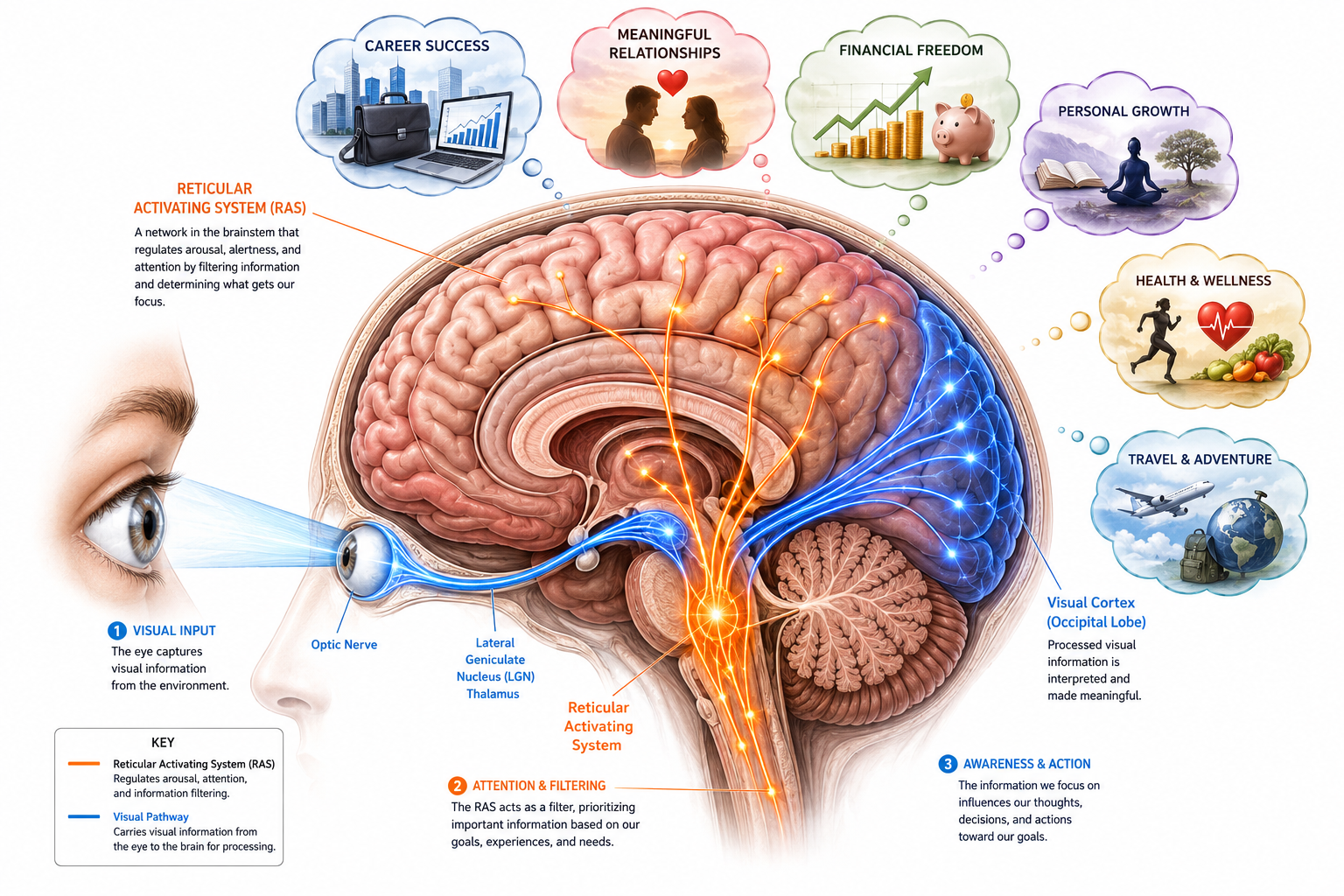
Understanding the psychology behind manifestation reveals four core mechanisms that explain why these practices can influence real-world outcomes. Each component works together to create measurable changes in perception, decision-making, and behavior patterns.
Thoughts Influence Attention
The human brain processes millions of pieces of information daily, but conscious attention can only focus on a small fraction at any given moment. What you think about regularly becomes what you notice most readily in your environment.
When someone consistently focuses on specific goals or outcomes, their brain begins filtering incoming information to highlight relevant opportunities, resources, and connections. This isn’t mystical – it’s a documented neurological process that affects how people perceive and interact with their surroundings.
For example, someone focused on career advancement will naturally notice job postings, networking opportunities, and skill-building resources that others might overlook. Their thoughts haven’t magically created these opportunities, but focused attention has made them more aware of existing possibilities.
Beliefs Affect Behavior
Personal beliefs about capabilities, worthiness, and possibilities directly influence the actions people take and the risks they’re willing to accept. Empowering beliefs increase confidence and persistence, while limiting beliefs create hesitation and self-sabotage.
Someone who believes they deserve success approaches challenges differently than someone who doubts their abilities. These belief-driven behaviors compound over time, creating dramatically different life trajectories based on internal expectations and self-concept.
Research in psychology consistently shows that people’s beliefs about their capabilities (called self-efficacy) predict their actual performance across various domains, from academic achievement to career success to relationship satisfaction.
Emotions Influence Motivation
Emotional states directly impact motivation levels, decision-making quality, and persistence through difficulties. Positive emotional associations with goals increase sustained effort, while negative emotions like fear or desperation often create counterproductive behaviors.
When manifestation practices help people feel genuinely excited, grateful, or confident about their objectives, these emotional states naturally support the consistent action required for success. Conversely, obsessive worry or desperate attachment to outcomes typically reduces performance and creates stress-based decision-making.
Understanding this emotional component explains why effective manifestation emphasizes feeling good about goals rather than anxiously obsessing over them. The emotional quality of focus matters as much as the focus itself.
Habits Create Long-Term Results
Perhaps most importantly, manifestation practices that successfully change outcomes do so by establishing new behavioral patterns and daily habits. Repeated small actions aligned with specific goals create compound effects that generate significant changes over time.
When someone uses manifestation techniques to clarify their priorities and maintain consistent focus, they naturally develop habits that support their objectives. These behavioral changes, sustained over weeks and months, create the actual results that people attribute to manifestation.
The psychology is straightforward: clear intentions plus emotional engagement plus consistent action equals measurable progress toward desired outcomes. This formula works regardless of whether someone believes in manifestation as a concept.
The Science and Psychology Behind Manifesting
Several well-documented psychological phenomena explain how manifesting works from a scientific perspective. These mechanisms demonstrate that manifestation techniques can create real changes in perception, behavior, and outcomes when properly understood and applied.
The Reticular Activating System (RAS)
The reticular activating system is a network of neurons in the brainstem that filters sensory information and determines what reaches conscious awareness. This system explains one of the most important aspects of how manifesting works at a neurological level.
How the Brain Filters Information
Your RAS constantly scans the environment for information that matches your current priorities, beliefs, and areas of focus. It acts like a search engine for your conscious mind, highlighting relevant details while filtering out less important stimuli.
This filtering process explains why people often notice specific car models everywhere after deciding to buy one, or why new parents suddenly become aware of babies and child-related products in their environment. The RAS hasn’t created these things – it has simply made existing information more visible.
When manifestation practices consistently direct attention toward specific goals or outcomes, the RAS begins prioritizing related information. This creates increased awareness of opportunities, resources, and connections that support those objectives.
Why Focus Matters
The quality and consistency of mental focus directly influences RAS programming. Vague or inconsistent intentions produce weak filtering effects, while clear, emotionally engaging goals create strong perceptual changes.
This scientific understanding explains why successful manifestation requires specificity and regular practice. The brain needs consistent input to establish new filtering patterns, and emotional engagement strengthens the neural pathways involved in attention and memory.
People who understand this mechanism can use manifestation techniques more effectively by providing their RAS with clear, specific, and emotionally meaningful targets for attention and awareness.
Self-Fulfilling Prophecies
Self-fulfilling prophecies demonstrate how expectations and beliefs directly influence outcomes through behavioral changes. This psychological phenomenon provides another key insight into how manifesting works in practical situations.
Expectations Shape Actions
When people genuinely expect positive outcomes, they unconsciously behave in ways that increase the likelihood of success. Confident expectations lead to more persistent effort, better preparation, and increased willingness to take appropriate risks.
Conversely, negative expectations often create self-sabotaging behaviors, reduced effort, and premature abandonment of goals. These expectation-driven behavioral changes then influence actual outcomes, making initial beliefs appear prophetic.
Research in education, business, and relationships consistently shows that positive expectations improve performance while negative expectations reduce it. This occurs through measurable changes in effort, persistence, and decision-making quality.
Positive and Negative Examples
A person who expects to succeed in job interviews typically prepares more thoroughly, presents themselves more confidently, and persists through initial rejections. Their positive expectations create behaviors that genuinely improve their chances of success.
Similarly, someone who expects relationship difficulties often becomes more defensive, less communicative, and more likely to interpret neutral behaviors negatively. These expectation-driven responses can create the very problems they feared.
Understanding self-fulfilling prophecies helps explain why manifestation practices that genuinely shift expectations and beliefs can produce measurable changes in life outcomes. The key is creating authentic confidence rather than forced positive thinking.
Visualization and Mental Rehearsal
Athletes, performers, and professionals across various fields use visualization techniques to improve performance. The psychological research behind these practices reveals important insights about how manifesting works through mental rehearsal.
Why Athletes and Performers Use Visualization
Mental practice activates many of the same neural pathways involved in physical performance. Regular visualization strengthens neural connections, improves muscle memory, and enhances confidence during actual performance situations.
Studies show that athletes who combine physical practice with mental rehearsal outperform those who rely on physical practice alone. The brain treats vivid mental experiences as partial reality, creating measurable improvements in coordination, timing, and performance under pressure.
This research explains why visualization is a core component of many manifestation practices. When done correctly, mental rehearsal prepares the brain and body for successful execution of desired behaviors and outcomes.
Emotional Engagement Improves Focus
Visualization becomes significantly more effective when combined with appropriate emotional states. Feelings of confidence, excitement, and satisfaction during mental rehearsal strengthen the neural pathways and increase motivation for real-world action.
Neuroscience research shows that emotionally engaging visualizations activate more brain regions and create stronger memory formation than purely cognitive mental practice. This explains why effective manifestation emphasizes feeling connected to goals rather than simply thinking about them.
The combination of clear mental imagery with positive emotional states creates a powerful psychological preparation that supports improved performance and increased persistence toward objectives.
Emotional Conditioning
Emotions play a crucial role in learning, memory, and motivation. Understanding emotional conditioning reveals another important mechanism behind how manifesting works to influence behavior and outcomes.
Repeated Emotions Reinforce Patterns
When people consistently associate specific emotions with particular goals or activities, these emotional connections become automatic responses that influence future behavior. Positive emotional associations increase motivation and persistence, while negative associations create avoidance and resistance.
Manifestation practices that help people feel genuinely good about their objectives create positive emotional conditioning that supports consistent action. This emotional reinforcement makes goal-directed behaviors feel more natural and sustainable over time.
Conversely, fear-based or desperate approaches to manifestation often create negative emotional associations that undermine motivation and create stress-related decision-making problems.
Emotional States Influence Decisions
Current emotional states significantly impact decision-making quality, risk assessment, and creative problem-solving abilities. Calm, positive emotional states support clearer thinking and better choices, while stressed or anxious states often lead to poor decisions and missed opportunities.
Effective manifestation practices help people maintain emotional states that support good decision-making and consistent action toward their goals. This emotional regulation component is often more important than the specific visualization or affirmation techniques used.
Understanding emotional conditioning helps explain why manifestation works best when it feels good and creates genuine excitement about possibilities, rather than anxiety or desperate attachment to specific outcomes.
For those interested in developing better emotional awareness and regulation, exploring holistic life coaching approaches can provide valuable tools for managing emotional states effectively.
The Core Components of Successful Manifestation
Effective manifestation requires several key components working together to create meaningful results. Understanding these elements helps explain how manifesting works in practice and why some approaches succeed while others fail.
1. Clarity
Vague goals produce weak results because the brain needs specific targets to effectively filter information and direct behavior. Clear, detailed objectives provide the focus necessary for manifestation techniques to work effectively.
Define Exactly What You Want
Successful manifestation begins with precise goal definition that goes beyond general wishes or broad categories. Instead of “I want to be successful,” effective goals specify “I want to earn $75,000 annually in a marketing role at a company that values creativity and work-life balance.”
This specificity helps the reticular activating system identify relevant opportunities and resources. Detailed goals also make it easier to recognize progress and adjust strategies when necessary.
Many people struggle with manifestation because they haven’t invested time in clarifying exactly what they want to achieve. Without clear targets, even the most sophisticated techniques produce scattered or disappointing results.
Written Goals Increase Awareness
Research consistently shows that people who write down their goals achieve them at significantly higher rates than those who keep goals purely mental. Writing forces clarity and creates external accountability that strengthens commitment and focus.
Manifestation journaling provides a structured approach for developing goal clarity while tracking progress and identifying patterns. The act of writing engages different brain regions and creates stronger memory formation than mental planning alone.
Regular written review of goals also helps maintain focus and allows for strategic adjustments based on new information or changing circumstances.
2. Belief
Personal beliefs about possibilities, worthiness, and capabilities directly influence the effort people invest and the risks they’re willing to take. Limiting beliefs create internal resistance that undermines even the most consistent manifestation practices.
Limiting Beliefs Create Resistance
Common limiting beliefs include “I don’t deserve success,” “Money is hard to earn,” or “Good relationships require sacrifice.” These unconscious assumptions create self-sabotaging behaviors that prevent people from taking full advantage of opportunities.
Identifying and addressing limiting beliefs is often more important than learning new manifestation techniques. Negative self-talk and unconscious assumptions can override conscious intentions and create persistent patterns of self-defeating behavior.
Techniques from Neuro Linguistic Programming offer systematic approaches for identifying and changing limiting belief patterns that interfere with goal achievement.
Empowering Beliefs Increase Action
Beliefs like “I learn quickly,” “Opportunities are abundant,” or “I deserve happiness” create psychological conditions that support persistent effort and creative problem-solving. Self-trust and confidence naturally increase the quality and quantity of goal-directed actions.
Developing empowering beliefs often requires consistent evidence-gathering through small successes and positive experiences. Manifestation practices work best when they gradually build authentic confidence rather than trying to force immediate belief changes.
The goal is developing genuine self-efficacy based on real capabilities and past achievements, not unrealistic positive thinking that ignores actual limitations or challenges.
3. Emotional Alignment
The emotional quality of focus significantly influences motivation, decision-making, and persistence. Feeling genuinely good about goals creates sustainable motivation, while negative emotions often undermine consistent action.
Feeling Connected to the Goal
Effective manifestation involves cultivating authentic positive emotions like excitement, gratitude, and confidence in relation to desired outcomes. These emotional states naturally support the consistent effort required for success.
Emotional connection makes goals feel personally meaningful rather than externally imposed or socially expected. This intrinsic motivation creates more sustainable behavior changes than external pressure or fear-based motivation.
People who successfully use manifestation techniques report feeling genuinely excited about their goals rather than anxious or desperate about achieving them. This emotional quality distinguishes effective practices from counterproductive obsessing.
Avoiding Fear-Based Obsession
Desperation, anxiety, and obsessive attachment to outcomes often create emotional states that interfere with good decision-making and consistent action. Fear-based manifestation typically produces stress and self-defeating behaviors.
Healthy manifestation maintains emotional balance by focusing on the process and personal growth rather than desperately needing specific outcomes. This approach reduces performance anxiety and allows for more creative and flexible responses to challenges.
The goal is caring deeply about objectives while remaining emotionally detached from the timeline and specific methods of achievement. This balance supports both motivation and mental health throughout the manifestation process.
4. Consistent Action
Perhaps the most important component of successful manifestation is translating mental and emotional work into consistent real-world behaviors. Thoughts and feelings alone cannot create results without corresponding actions and behavioral changes.
Manifestation Requires Real-World Effort
Every successful manifestation story involves someone taking concrete steps toward their goals while using mental techniques to maintain focus and motivation. The psychological benefits of manifestation practices enhance performance but cannot replace actual effort and skill development.
Action transforms possibility into reality by creating real progress, building confidence through achievement, and generating feedback that allows for strategic adjustments. Mental practices support and amplify action but cannot substitute for it.
Understanding this principle helps people avoid the common trap of using manifestation techniques as a way to avoid taking difficult or uncomfortable steps toward their objectives.
Daily Habits Shape Outcomes
Small, consistent actions aligned with specific goals create compound effects that generate significant changes over time. Manifestation works best when it supports the development of productive daily habits rather than hoping for sudden transformations.
Someone manifesting career success might develop habits like daily skill practice, regular networking, or consistent job searching. The manifestation practices help maintain motivation and focus, while the daily actions create actual progress toward employment goals.
This habit-based approach makes manifestation more practical and sustainable by breaking large goals into manageable daily behaviors that accumulate into meaningful results over time.
Popular Manifestation Techniques
Several manifestation techniques have gained popularity due to their effectiveness in applying the psychological principles discussed above. Understanding how these methods work helps people choose approaches that align with their learning style and objectives.
Visualization
Mental imagery techniques help people clarify goals, practice successful behaviors, and maintain emotional connection to desired outcomes. Effective visualization combines clear mental pictures with appropriate emotional states to strengthen neural pathways and increase motivation.
The key is creating vivid, detailed mental experiences that feel engaging and realistic rather than forced or artificial. Regular visualization sessions help maintain focus and prepare the mind for recognizing and acting on relevant opportunities.
Affirmations
Positive self-statements can help reprogram limiting beliefs and internal dialogue patterns that interfere with goal achievement. Effective affirmations feel authentic and focus on capabilities rather than wishful thinking about external circumstances.
Instead of “I am rich,” more effective affirmations might include “I am developing valuable skills” or “I notice opportunities for growth.” These statements support confidence and awareness without creating internal resistance through unrealistic claims.
Journaling
Written reflection helps clarify goals, identify limiting beliefs, track progress, and maintain accountability. Manifestation journaling provides structure for regular self-examination and strategic planning toward specific objectives.
Different journaling approaches include gratitude practices, goal clarification exercises, belief examination, and progress tracking. The writing process engages analytical thinking while creating external accountability for consistent action.
Meditation and Mindfulness
Contemplative practices improve focus, emotional regulation, and self-awareness – all crucial components of effective manifestation. Regular meditation strengthens attention control and reduces emotional reactivity that can interfere with good decision-making.
Mindfulness practices also increase awareness of thoughts, emotions, and behavioral patterns, making it easier to identify and change limiting beliefs or counterproductive habits that undermine goal achievement.
Vision Boards
Visual representations of goals serve as daily reminders that help maintain focus and motivation. Effective vision boards combine inspiring images with specific, actionable objectives rather than vague wishes or fantasy scenarios.
The process of creating vision boards forces goal clarification while the finished product provides ongoing visual reinforcement of priorities and intentions. Regular viewing helps keep objectives at the forefront of consciousness.
Why Some People Think Manifesting “Doesn’t Work”
Many people abandon manifestation practices due to unrealistic expectations or ineffective approaches that ignore the psychological principles behind how manifesting works. Understanding common mistakes helps avoid these pitfalls.
Unrealistic Expectations
Expecting instant transformation without corresponding effort or skill development leads to inevitable disappointment and abandonment of manifestation practices. Real change typically requires weeks or months of consistent practice and action.
People influenced by exaggerated marketing claims may believe that visualization alone should produce immediate results. This misunderstanding ignores the behavioral and skill development components necessary for meaningful goal achievement.
Lack of Action
Using manifestation techniques as a substitute for real-world effort rather than a supplement to it virtually guarantees failure. Mental practices enhance performance but cannot replace the need for actual work and skill development.
Some people become so focused on perfecting their visualization or affirmation practice that they avoid taking concrete steps toward their goals. This approach reverses the proper relationship between mental techniques and practical action.
Inconsistency
Sporadic practice produces weak results because the psychological mechanisms behind manifestation require consistent reinforcement to create lasting changes in attention, belief, and behavior patterns. Weekly or monthly practice sessions lack the frequency needed to reprogram neural pathways effectively.
Successful manifestation typically requires daily practice, even if only for a few minutes, to maintain focus and emotional alignment with objectives. Inconsistent effort produces inconsistent results in manifestation just as in any other skill development.
Fear and Self-Doubt
Negative emotional patterns like anxiety, desperation, or self-doubt create internal resistance that undermines manifestation practices. Fear-based emotions interfere with the positive emotional states that support motivation and good decision-making.
People who approach manifestation from a place of lack or desperation often create additional stress rather than the confidence and excitement that facilitate success. Addressing underlying emotional patterns may be necessary before manifestation techniques become effective.
Obsessing Over Results
Emotional attachment to specific outcomes and timelines often creates anxiety that interferes with the relaxed confidence necessary for effective manifestation. Desperate monitoring of progress can create stress that reduces performance and decision-making quality.
Healthy manifestation maintains care and commitment while allowing flexibility in methods and timing. This emotional balance supports both motivation and mental health throughout the goal achievement process.
How Manifesting Can Improve Different Areas of Life
Understanding how manifesting works psychologically reveals its potential applications across various life domains. The same principles of focused attention, emotional alignment, and consistent action can enhance outcomes in multiple areas.
Financial Goals
Manifestation practices help people develop healthier relationships with money by clarifying financial objectives, identifying limiting beliefs about wealth, and maintaining motivation for consistent financial behaviors. Building confidence around money management often produces more significant results than hoping for sudden windfalls.
Effective financial manifestation focuses on developing valuable skills, recognizing income opportunities, and maintaining disciplined saving and investing habits. The mental practices support the behavioral changes necessary for long-term financial improvement.
Career Growth
Professional advancement benefits from manifestation techniques that increase awareness of opportunities, build confidence for networking and skill development, and maintain motivation during challenging periods. Career manifestation works best when combined with strategic skill building and consistent professional development.
Visualization can help people prepare for interviews, presentations, and challenging conversations while affirmations support confidence during networking and career transitions. The key is using mental techniques to enhance rather than replace professional competence.
Relationships
Manifestation practices can improve relationships by helping people clarify what they want in connections with others, identify and change limiting beliefs about relationships, and maintain positive emotional states that attract healthy interactions. Relationship manifestation focuses on becoming the type of person who naturally attracts desired relationships.
This approach emphasizes personal development, communication skills, and emotional health rather than trying to control or manipulate specific individuals. The goal is creating internal conditions that support healthy, fulfilling relationships.
Health and Wellness
Physical health goals benefit from manifestation practices that maintain motivation for consistent exercise, healthy eating, and stress management. Wellness manifestation supports the behavioral consistency necessary for long-term health improvements.
Visualization can help people maintain motivation during difficult lifestyle changes while emotional alignment techniques support the positive mindset necessary for sustained healthy behaviors. The mental practices complement rather than replace proper medical care and healthy lifestyle choices.
Personal Development
Self-improvement goals like building confidence, developing new skills, or overcoming fears benefit significantly from manifestation techniques that maintain focus and motivation during the gradual process of personal change. Personal development manifestation emphasizes progress over perfection.
These applications often produce the most dramatic results because they directly address the beliefs, emotions, and behaviors that influence all other life areas. Developing self-awareness and emotional regulation skills creates a foundation for success in multiple domains.
For those interested in comprehensive personal development approaches, exploring methods to increase brain power can complement manifestation practices with cognitive enhancement techniques.
Common Myths About Manifesting
Several misconceptions about manifestation create unrealistic expectations and ineffective practices. Addressing these myths helps people develop more realistic and effective approaches to using manifestation principles.
“Manifestation Is Magic”
Manifestation works through documented psychological mechanisms rather than supernatural forces or universal energy manipulation. Understanding the science behind attention, belief, emotion, and behavior provides a more reliable foundation for effective practice.
This psychological perspective makes manifestation more accessible and practical while maintaining respect for the genuine benefits these techniques can provide when properly understood and applied.
“Positive Thinking Alone Is Enough”
Optimistic thoughts without corresponding action and skill development rarely produce meaningful results. Effective manifestation requires both mental practices and real-world effort working together to create desired outcomes.
The most successful manifestation practitioners use mental techniques to enhance their motivation, focus, and confidence while taking consistent action toward their goals. Neither component alone is sufficient for significant achievement.
“You Can Instantly Manifest Anything”
Real transformation typically requires time for skill development, habit formation, and gradual progress toward objectives. Instant manifestation claims ignore the natural learning curves involved in developing new capabilities and achieving meaningful goals.
Realistic expectations about timing help people maintain motivation during the inevitable challenges and setbacks that accompany any significant life change or goal achievement process.
“Manifestation Means Ignoring Reality”
Healthy manifestation includes honest assessment of current circumstances and realistic planning for goal achievement. Effective practices balance optimism with practical consideration of obstacles, required skills, and necessary resources.
Ignoring reality or avoiding responsibility while hoping for magical solutions represents escapism rather than genuine manifestation. True manifestation enhances rather than replaces practical problem-solving and strategic planning.
Signs Your Manifestation Practice Is Working
Recognizing progress indicators helps people maintain motivation and adjust their approaches when necessary. Effective manifestation produces measurable changes in awareness, behavior, and emotional patterns before external results become visible.
Increased Clarity and Focus
People developing effective manifestation practices report greater clarity about their goals and priorities along with improved ability to maintain focus on important activities. Enhanced concentration and decision-making often appear before external circumstances change significantly.
This increased mental clarity makes it easier to recognize opportunities and make choices that align with desired outcomes. The improved focus also enhances performance in goal-related activities.
Better Habits and Consistency
Successful manifestation naturally supports the development of productive daily habits that align with specific objectives. People find it easier to maintain consistent behaviors when they feel emotionally connected to their goals.
This behavioral consistency creates the compound effects that generate meaningful results over time. Improved habits often represent the most important early indicator of effective manifestation practice.
Improved Confidence and Emotional Control
Regular manifestation practice typically increases self-confidence and emotional regulation skills. People report feeling more capable and optimistic about their ability to achieve their objectives and handle challenges effectively.
This emotional improvement supports better decision-making and increased willingness to take appropriate risks or try new approaches when current strategies aren’t producing desired results.
Reduced Fear and Overthinking
Effective manifestation practices help people worry less and act more by building confidence and maintaining focus on constructive activities rather than potential problems or obstacles.
This reduced anxiety creates mental space for creative problem-solving and strategic thinking while improving overall quality of life during the goal achievement process.
Greater Awareness of Opportunities
People using manifestation techniques effectively notice more opportunities, resources, and helpful connections related to their objectives. This increased awareness results from improved attention filtering rather than magical attraction of new possibilities.
The enhanced opportunity recognition creates more options for progress and helps people take advantage of circumstances they might previously have overlooked or ignored.
Daily Habits That Strengthen Manifestation
Consistent daily practices create the psychological conditions necessary for effective manifestation. Regular habits produce stronger results than sporadic intensive sessions because they provide ongoing reinforcement of desired mental and emotional patterns.
Morning Visualization
Starting each day with brief visualization helps set intentions and maintain emotional connection to goals throughout daily activities. Five to ten minutes of clear mental imagery can influence attention and decision-making for hours afterward.
Effective morning visualization combines clear mental pictures with appropriate emotions and specific intentions for the day ahead. This practice helps maintain focus on priorities while building confidence for goal-directed actions.
Gratitude Reflection
Regular appreciation practices improve emotional states and increase awareness of positive aspects of current circumstances. Gratitude creates emotional conditions that support optimism and motivation while reducing stress and anxiety.
Daily gratitude reflection can focus on progress toward goals, supportive relationships, available opportunities, or personal strengths and capabilities. This practice builds emotional resilience during challenging periods.
Goal Journaling
Written reflection helps maintain clarity and track progress while identifying obstacles and adjusting strategies when necessary. Regular journaling creates accountability and provides valuable feedback about what approaches are working effectively.
Effective manifestation journaling might include goal clarification, progress tracking, belief examination, and strategic planning components that support both mental clarity and practical action.
Meditation and Mindfulness
Contemplative practices improve attention control and emotional regulation – both crucial skills for effective manifestation. Regular meditation strengthens the mental focus necessary for consistent visualization and affirmation practices.
Mindfulness also increases awareness of thoughts, emotions, and behavioral patterns, making it easier to identify and change limiting beliefs or counterproductive habits that interfere with goal achievement.
Taking Purposeful Daily Action
Every day should include at least one concrete step toward important goals to maintain momentum and build confidence through actual progress. These actions can be small but should clearly connect to desired outcomes.
Daily action creates the real-world progress that makes manifestation practices feel authentic and meaningful rather than wishful thinking. This behavioral component often determines whether manifestation techniques produce lasting results.
The Difference Between Healthy Manifesting and Escapism
Understanding the distinction between effective manifestation and psychological avoidance helps people use these techniques constructively rather than as a way to avoid responsibility or difficult realities.
Healthy Manifesting
Effective manifestation enhances rather than replaces practical problem-solving and strategic planning. It combines optimistic thinking with realistic assessment of current circumstances and required actions for goal achievement.
Healthy practices increase motivation, focus, and confidence while supporting consistent effort toward clearly defined objectives. The mental techniques complement real-world skill development and strategic action rather than substituting for them.
People using manifestation effectively report increased energy for goal-directed activities and greater resilience during challenging periods. Their practice enhances their engagement with reality rather than encouraging withdrawal from it.
Escapism
Using manifestation techniques to avoid taking responsibility or addressing difficult circumstances represents psychological escapism rather than genuine personal development. This approach often increases anxiety and reduces actual progress toward objectives.
Escapist manifestation focuses on hoping for external rescue or magical solutions rather than developing the capabilities and taking the actions necessary for meaningful change. It encourages passive waiting rather than active engagement with goals.
People using manifestation as escapism often become increasingly frustrated with lack of results while avoiding the practical steps that could create real progress toward their objectives.
Staying Grounded
Effective manifestation maintains balance between optimism and realism by combining inspiring vision with honest assessment of current circumstances and practical planning for goal achievement.
This grounded approach uses mental techniques to enhance motivation and focus while maintaining clear awareness of required skills, potential obstacles, and necessary resources for success.
The goal is developing authentic confidence based on real capabilities and consistent action rather than unrealistic positive thinking that ignores practical requirements for meaningful achievement.
Conclusion
The psychology behind how manifesting works reveals a sophisticated interplay of attention, belief, emotion, and behavior that can genuinely influence life outcomes when properly understood and applied. Rather than magical thinking, effective manifestation leverages documented psychological mechanisms like the reticular activating system, self-fulfilling prophecies, and emotional conditioning to enhance focus, build confidence, and support consistent action toward specific goals.
The key insight is that manifestation works best as a complement to practical effort rather than a replacement for skill development and strategic action. Mental techniques like visualization, affirmations, and goal clarification create psychological conditions that support better decision-making, increased motivation, and enhanced awareness of opportunities. However, these benefits only translate into meaningful results when combined with consistent real-world behaviors aligned with desired outcomes.
Common misconceptions about instant transformation or magical attraction often lead to disappointment and abandonment of potentially valuable practices. Realistic expectations about timing and effort requirements help people maintain motivation during the gradual process of habit formation and skill development that creates lasting change.
The most successful manifestation practitioners understand that thoughts, emotions, and beliefs influence behavior, which in turn shapes life circumstances over time. This psychological perspective makes manifestation more practical and accessible while maintaining respect for the genuine benefits these techniques can provide.
Whether applied to financial goals, career advancement, relationships, health, or personal development, manifestation principles work by helping people clarify objectives, maintain focus, build confidence, and sustain motivation for the consistent actions that create meaningful progress.
For those ready to begin or improve their manifestation practice, start with clear goal definition, develop daily habits that support emotional alignment and practical action, and maintain realistic expectations about the time and effort required for significant results. Remember that lasting change occurs through the compound effects of consistent small actions rather than sudden transformation.
The journey of understanding how manifesting works ultimately reveals that people have more influence over their life outcomes than they often realize. By consciously directing attention, cultivating empowering beliefs, maintaining positive emotional states, and taking consistent action, individuals can create meaningful improvements across multiple life domains. The key is approaching manifestation as a practical skill set for personal development rather than a magical solution to life’s challenges.


