
Picture this: you’re sitting in a room with 10 people. Statistically, at least 1-2 of them are likely neurodivergent. This reality might surprise many, but how common is neurodivergence has become one of the most important questions in understanding human diversity today. As awareness grows and diagnostic tools improve, we’re discovering that neurological differences are far more prevalent than previously thought.
The conversation around neurodivergence has shifted dramatically in 2026. What was once considered rare or unusual is now recognized as a natural part of human variation. Understanding these numbers isn’t just about statistics—it’s about recognizing the experiences of millions of people and creating a more inclusive world.
Key Takeaways
• Approximately 15-20% of the population may be neurodivergent, making it far more common than many realize
• Multiple conditions fall under the neurodivergent umbrella, including ADHD, autism, dyslexia, and others
• Many cases remain undiagnosed, particularly in adults and women, meaning actual numbers could be higher
• Growing awareness is leading to better identification and support for neurodivergent individuals
• Understanding prevalence helps reduce stigma and promotes acceptance of neurological differences
What Is Neurodivergence?
Neurodivergence refers to natural variations in how the brain functions, processes information, and experiences the world. Rather than viewing these differences as disorders or deficits, the neurodiversity movement recognizes them as part of human neurological variation—much like biodiversity in nature.
The term encompasses several conditions that affect:
- Attention and focus (ADHD)
- Social communication (Autism)
- Learning processes (Dyslexia, Dyspraxia)
- Sensory processing
- Executive functioning
Common Neurodivergent Conditions
🧠 ADHD (Attention-Deficit/Hyperactivity Disorder)
- Affects attention, hyperactivity, and impulse control
- Often includes strengths in creativity and problem-solving
🌟 Autism Spectrum Disorder
- Impacts social communication and includes repetitive behaviors
- Often comes with intense interests and attention to detail
📚 Dyslexia
- Affects reading and language processing
- Often paired with strong visual-spatial skills
⚡ Dyspraxia
- Impacts coordination and motor planning
- May include challenges with organization
🎯 Tourette’s Syndrome
- Involves involuntary tics
- Often accompanied by high intelligence and creativity
🔄 OCD (Obsessive-Compulsive Disorder)
- Features repetitive thoughts and behaviors
- Can include exceptional attention to detail
For individuals navigating these differences, developing self-awareness becomes crucial for understanding personal strengths and challenges.
How Common Is Neurodivergence in the General Population?
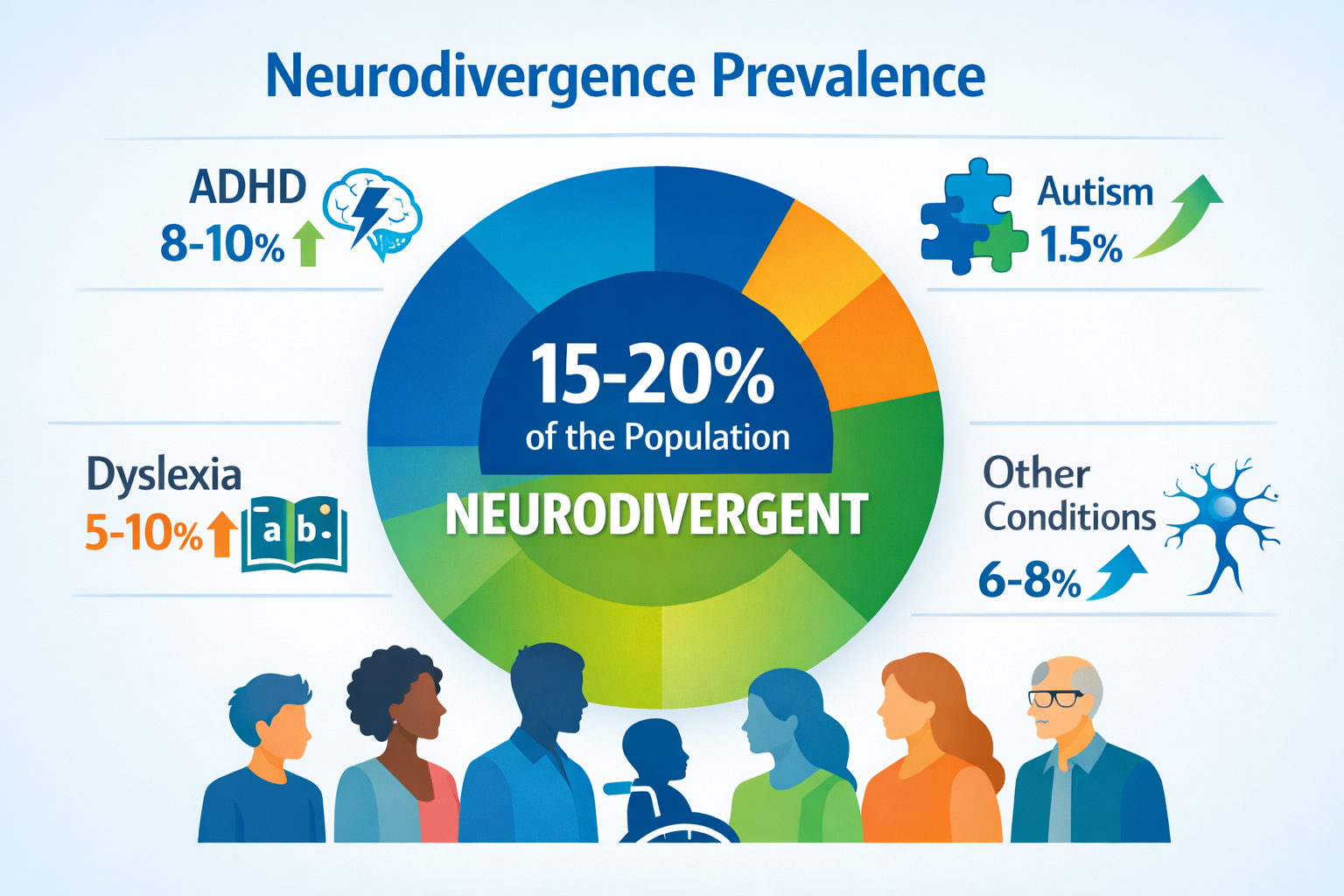
Research suggests that 15-20% of the global population may be neurodivergent. This means that in any group of 100 people, approximately 15-20 individuals likely have some form of neurological difference.
However, these numbers come with important caveats:
Why Exact Numbers Vary
📊 Different Research Methods
- Studies use varying diagnostic criteria
- Sample sizes and populations differ
- Some focus on specific age groups
🔍 Diagnostic Evolution
- Criteria have changed over time
- Better understanding leads to revised estimates
- Cultural factors influence recognition
🌍 Geographic Differences
- Access to healthcare varies globally
- Cultural attitudes affect diagnosis rates
- Socioeconomic factors play a role
The Iceberg Effect
Many experts believe current statistics represent only the “tip of the iceberg.” The actual prevalence may be higher due to:
- Undiagnosed adults who grew up before awareness increased
- Masking behaviors that hide symptoms
- Gender bias in diagnostic criteria
- Cultural barriers to seeking evaluation
Understanding these challenges often requires building self-confidence skills to advocate for proper assessment and support.
Prevalence of Specific Neurodivergent Conditions
ADHD: The Most Common Neurodivergent Condition
ADHD affects approximately 5-7% of children and 2-5% of adults worldwide.
Key statistics:
- Boys vs. Girls: Historically diagnosed 3:1, but this gap is narrowing
- Adult Diagnosis: Increasing as awareness grows
- Lifetime Prevalence: May be higher than current estimates suggest
Autism Spectrum Disorder
Current estimates suggest 1 in 36 children (approximately 2.8%) are on the autism spectrum.
Notable trends:
- Rising Diagnoses: Numbers have increased significantly over the past decade
- Better Recognition: Particularly in girls and adults
- Spectrum Understanding: Recognition of diverse presentations
Dyslexia and Learning Differences
Dyslexia affects 10-15% of the population, making it one of the most common learning differences.
Related conditions:
- Dysgraphia: 5-20% of people have writing difficulties
- Dyscalculia: 3-7% experience math-related challenges
- Dyspraxia: Affects 2-6% of the population
Other Neurological Differences
Tourette’s Syndrome: 0.3-0.9% of children
OCD: 1-2% of the general population
Sensory Processing Differences: May affect 5-16% of children
For those experiencing challenges with these conditions, learning about effective stress management techniques can be particularly beneficial.
Why Neurodivergence Statistics May Be Underreported
Limited Access to Evaluations
Many factors prevent accurate diagnosis:
💰 Financial Barriers
- Evaluations can be expensive
- Insurance coverage varies
- Long waiting lists for specialists
🌍 Geographic Limitations
- Rural areas lack specialists
- Cultural competency varies
- Language barriers exist
Late Diagnoses in Adults
Adult diagnosis is becoming increasingly common as people recognize symptoms they’ve lived with for years.
Common scenarios:
- Parent Recognition: Adults realize they’re neurodivergent when their children are diagnosed
- Workplace Challenges: Career difficulties prompt evaluation
- Relationship Issues: Partners notice patterns
Gender Differences in Presentation
Research shows significant gender bias in neurodivergent diagnoses:
Girls and Women Often:
- Internalize symptoms (masking)
- Show less obvious hyperactivity
- Develop coping strategies that hide difficulties
- Receive later diagnoses
Boys and Men Typically:
- Display more externalized behaviors
- Get diagnosed earlier
- Receive more research attention
This disparity means many women remain undiagnosed, affecting overall prevalence statistics.
Addressing these challenges often involves learning effective self-care strategies and building support systems.
The Rise in Neurodivergence Awareness
Increased Research and Education
The landscape of neurodivergence understanding has transformed dramatically:
📚 Better Research
- More funding for neurodiversity studies
- Improved diagnostic tools
- Longitudinal studies providing clearer data
🎓 Educational Initiatives
- Teacher training programs
- Public awareness campaigns
- Professional development for healthcare providers
Online Communities and Advocacy
Social media has revolutionized how people learn about and discuss neurodivergence:
- Personal Stories: Individuals sharing experiences
- Information Access: Educational content widely available
- Support Networks: Online communities providing connection
- Advocacy Movements: Pushing for acceptance and accommodation
Changing Societal Attitudes
2026 has seen significant shifts in how society views neurological differences:
✅ From Deficit to Difference
- Focus on strengths alongside challenges
- Recognition of valuable perspectives
- Emphasis on accommodation rather than “fixing”
✅ Workplace Evolution
- Neurodiversity hiring initiatives
- Accommodation policies
- Recognition of diverse thinking styles
Why Understanding How Common Is Neurodivergence Matters
Reducing Stigma Through Numbers
When people realize how common neurodivergence is, several positive changes occur:
🤝 Increased Acceptance
- “Different, not less” mindset
- Recognition of shared humanity
- Reduced fear and misunderstanding
💪 Empowerment for Individuals
- Feeling less alone or “broken”
- Understanding personal experiences
- Building community connections
Encouraging Early Support
Accurate prevalence data helps:
- Parents recognize signs earlier
- Educators prepare appropriate accommodations
- Healthcare providers screen more effectively
- Policymakers allocate appropriate resources
Creating Inclusive Environments
Understanding prevalence drives systemic changes:
🏢 Workplace Adaptations
- Flexible work arrangements
- Sensory-friendly spaces
- Clear communication protocols
🏫 Educational Improvements
- Multiple learning modalities
- Reduced sensory overload
- Individualized support plans
For those working on personal growth within neurodivergent experiences, exploring ways to improve social skills can be particularly valuable.
Neurodivergence in Daily Life
How Traits Manifest in Different Settings
At School:
- Difficulty with traditional teaching methods
- Challenges with social interactions
- Struggles with organization or time management
- Exceptional abilities in specific subjects
At Work:
- Need for clear instructions and expectations
- Sensitivity to office environments
- Innovative problem-solving approaches
- Attention to detail others might miss
At Home:
- Sensory sensitivities affecting daily routines
- Need for structure and predictability
- Creative approaches to household tasks
- Strong focus on personal interests
Recognizing Neurodivergent Strengths
Common strengths include:
🎨 Creativity and Innovation
- Unique perspectives on problems
- Artistic and creative abilities
- “Outside the box” thinking
🔍 Attention to Detail
- Noticing patterns others miss
- Quality control abilities
- Thoroughness in work
⚡ Hyperfocus Abilities
- Deep concentration on interests
- Expertise development
- Sustained attention when engaged
🧩 Systems Thinking
- Understanding complex relationships
- Logical problem-solving
- Pattern recognition
The Importance of Supportive Environments
Success often depends more on environment than individual traits. Supportive settings include:
- Clear expectations and communication
- Sensory considerations
- Flexibility in approaches
- Recognition of diverse strengths
For individuals seeking to build confidence in these environments, understanding the characteristics of self-esteem can provide valuable insights.
When Someone Might Consider Professional Evaluation
Common Signs Across Age Groups
In Children:
- Persistent attention difficulties
- Social interaction challenges
- Learning struggles despite intelligence
- Sensory sensitivities
- Repetitive behaviors or intense interests
In Adults:
- Long-standing difficulties with organization
- Relationship or workplace challenges
- Feeling “different” from peers
- Family history of neurodivergent conditions
- Recognizing symptoms after learning about conditions
Benefits of Professional Assessment
🎯 Self-Understanding
- Clarity about personal experiences
- Validation of struggles
- Recognition of strengths
🛠️ Access to Support
- Appropriate accommodations
- Targeted interventions
- Community resources
📋 Practical Benefits
- Workplace accommodations
- Educational support
- Healthcare coordination
“Getting diagnosed was like finally having a map for territory I’d been navigating blindly my whole life.” – Adult diagnosed with ADHD at age 35
Conclusion
Understanding how common neurodivergence truly is reshapes our perspective on human diversity. With 15-20% of the population likely being neurodivergent, these differences represent a significant and valuable part of our communities. The numbers tell us that neurodivergence isn’t rare or unusual—it’s a natural part of human variation that deserves recognition, understanding, and support.
As awareness continues to grow in 2026, we’re moving toward a world that celebrates neurological diversity rather than stigmatizing it. The statistics matter not just for academic understanding, but for the millions of individuals who finally see themselves reflected in these numbers and realize they’re not alone.
Next Steps for Readers
If you suspect you or someone you care about might be neurodivergent:
- Learn More: Research specific conditions that resonate with your experiences
- Seek Professional Guidance: Consider evaluation from qualified professionals
- Connect with Communities: Find support groups or online communities
- Advocate for Accommodations: Work toward creating supportive environments
- Embrace the Journey: Remember that understanding neurodivergence is an ongoing process
The growing recognition of how common neurodivergence is represents hope for a more inclusive future. By understanding these numbers and what they mean, we can work together to create a world where neurological differences are not just accepted, but celebrated as essential parts of human diversity.
For those beginning this journey of understanding, remember that building inner peace and self-acceptance are crucial components of thriving with neurodivergent traits.


