
Have you ever wondered why some people struggle with reading, focusing, or processing visual information despite having “perfect” eyesight? 🤔 The connection between BVD and neurodivergence reveals a fascinating overlap that many families, educators, and healthcare providers are just beginning to understand. This hidden link between how our eyes work together and how our brains process information could explain why traditional approaches sometimes fall short in supporting neurodivergent individuals.
Understanding BVD and neurodivergence is crucial in 2026 as we recognize that vision problems can significantly impact learning, behavior, and daily functioning. Many symptoms once attributed solely to neurological differences may actually stem from treatable vision coordination issues.
Key Takeaways
• Binocular Vision Dysfunction (BVD) affects how the eyes work together and can mimic symptoms commonly associated with neurodivergent conditions
• Overlapping symptoms between BVD and neurodivergence include reading difficulties, attention challenges, and sensory processing issues
• Proper diagnosis requires specialized vision testing beyond standard eye exams to distinguish between vision-related and neurological causes
• Treatment options for BVD, including prism lenses and vision therapy, can significantly improve quality of life when properly identified
• Comprehensive support involves understanding both conditions to provide appropriate interventions and accommodations
What Is Binocular Vision Dysfunction (BVD)?
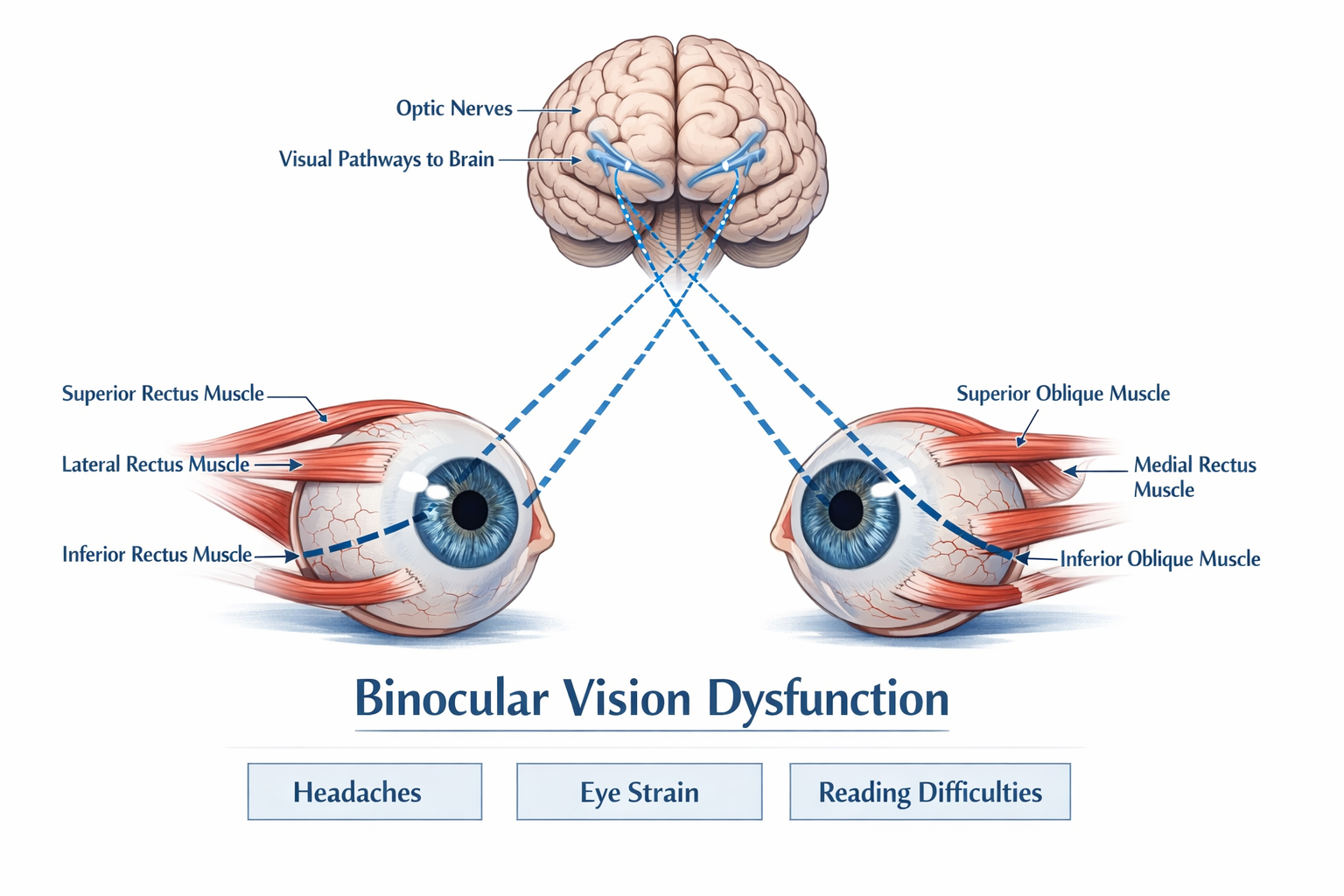
Binocular Vision Dysfunction occurs when the eyes struggle to work together as a coordinated team. Unlike simple refractive errors that affect visual clarity, BVD impacts how well the eyes align and focus together on objects at various distances.
When functioning properly, both eyes should:
- Point precisely at the same target
- Focus equally on near and far objects
- Move smoothly together during tracking
- Converge appropriately when reading or doing close work
Common BVD Symptoms Include:
Physical Discomfort:
- Frequent headaches, especially after visual tasks
- Eye strain and fatigue
- Neck and shoulder tension
- Dizziness or motion sensitivity
Visual Challenges:
- Difficulty maintaining focus while reading 📚
- Words appearing to move or blur on the page
- Losing place frequently when reading
- Double vision or seeing “ghost” images
Functional Impact:
- Avoiding reading or homework
- Poor reading comprehension despite intelligence
- Difficulty with depth perception
- Problems with coordination and balance
These symptoms often worsen with visual demands, making academic and work tasks particularly challenging. Cognitive brain training approaches may help, but addressing underlying vision issues is essential for lasting improvement.
What Is Neurodivergence?
Neurodivergence represents natural variations in brain function and cognitive processing. Rather than viewing these differences as deficits, the neurodiversity movement recognizes them as valuable variations in human neurological makeup.
Common Neurodivergent Conditions:
Attention Deficit Hyperactivity Disorder (ADHD):
- Difficulty sustaining attention
- Hyperactivity and impulsiveness
- Executive function challenges
- Sensory processing differences
Autism Spectrum Disorder (ASD):
- Social communication differences
- Repetitive behaviors and focused interests
- Sensory sensitivities
- Need for routine and predictability
Dyslexia:
- Reading and language processing challenges
- Difficulty with phonological awareness
- Struggles with spelling and writing
- Often accompanied by visual processing issues
Dyspraxia (Developmental Coordination Disorder):
- Motor planning and coordination difficulties
- Challenges with fine and gross motor skills
- Spatial awareness issues
- Often includes visual-motor integration problems
Neurodivergent individuals often experience the world differently, with unique strengths and challenges in processing sensory information, maintaining attention, and navigating social situations. Understanding these differences helps create more supportive environments and appropriate interventions.
Why BVD Is Sometimes Linked to Neurodivergence
The relationship between BVD and neurodivergence creates a complex web of overlapping symptoms that can lead to misunderstanding and misdiagnosis. Several factors contribute to this connection:
Shared Symptom Patterns
Both conditions can manifest as:
- Reading difficulties and comprehension challenges
- Attention problems during visual tasks
- Sensory overload in visually complex environments
- Fatigue after concentrated work
- Behavioral avoidance of challenging activities
Developmental Timing
Many neurodivergent individuals show differences in:
- Visual system development 👁️
- Motor coordination and planning
- Sensory integration abilities
- Executive function skills
These developmental variations can increase the likelihood of experiencing binocular vision challenges alongside neurological differences.
Misinterpretation in Educational Settings
Teachers and parents may observe:
- A bright child struggling with reading
- Inconsistent academic performance
- Behavioral issues during homework time
- Complaints of tiredness or headaches
Without understanding the potential role of vision dysfunction, these signs might be attributed solely to neurodivergent traits or learning disabilities. Overcoming cognitive bias in assessment approaches helps ensure comprehensive evaluation.
Compensatory Behaviors
Neurodivergent individuals often develop sophisticated coping strategies that may mask underlying vision problems. They might:
- Avoid reading-heavy activities
- Use finger tracking or other aids
- Take frequent breaks without understanding why
- Develop behavioral patterns that minimize visual stress
Symptoms That May Overlap Between BVD and Neurodivergence
Understanding the intersection of BVD and neurodivergence requires recognizing specific symptoms that appear in both conditions:
Reading and Academic Challenges
Shared Difficulties:
- Losing place while reading
- Re-reading lines or skipping words
- Poor reading fluency despite adequate decoding skills
- Fatigue during homework or studying
- Difficulty copying from the board
Attention and Focus Issues
Common Experiences:
- Trouble sustaining attention during visual tasks
- Appearing “spacey” or distracted
- Difficulty following multi-step visual instructions
- Inconsistent performance on similar tasks
Sensory Processing Concerns
Overlapping Sensitivities:
- Discomfort with bright lights or fluorescent lighting ✨
- Overwhelm in visually cluttered environments
- Difficulty filtering visual distractions
- Sensitivity to motion or moving patterns
Physical and Emotional Responses
Shared Reactions:
- Headaches or eye strain after visual work
- Irritability during or after reading
- Avoidance of visually demanding activities
- Complaints of feeling “tired” without obvious cause
These overlapping symptoms highlight why comprehensive evaluation is essential. Emotional brain training can support overall well-being, but addressing underlying vision issues may be necessary for optimal functioning.
How Vision Problems Can Affect Learning and Behavior
The impact of undiagnosed BVD on learning and behavior can be profound, especially when combined with neurodivergent traits. Understanding these effects helps explain why some interventions may not work as expected.
Academic Performance Impact
Reading Comprehension:
- Difficulty tracking across lines of text
- Mental fatigue that reduces comprehension
- Avoidance behaviors that limit practice
- Inconsistent performance that puzzles educators
Writing and Note-Taking:
- Challenges copying from the board
- Difficulty organizing information spatially
- Poor handwriting due to visual-motor coordination issues
- Fatigue during extended writing tasks
Mathematical Concepts:
- Problems aligning numbers in columns
- Difficulty with spatial relationships in geometry
- Challenges reading word problems effectively
- Issues with visual-spatial reasoning tasks
Behavioral Manifestations
Avoidance Patterns:
- Procrastination on homework assignments
- Complaints of boredom with reading activities
- Preference for audio or hands-on learning
- Resistance to visually demanding tasks
Physical Responses:
- Frequent position changes while reading
- Covering one eye or tilting head
- Rubbing eyes or complaining of tiredness
- Headaches that coincide with schoolwork
Social and Emotional Effects
Struggling with undiagnosed vision problems can impact:
- Self-esteem and academic confidence
- Peer relationships due to academic struggles
- Family dynamics around homework and school
- Future educational and career aspirations
Understanding self-esteem characteristics becomes crucial when supporting individuals facing these challenges.
How BVD Is Diagnosed
Proper diagnosis of BVD and neurodivergence requires specialized testing that goes beyond standard eye examinations. Many individuals pass routine vision screenings while still experiencing significant binocular vision challenges.
Specialized Vision Assessments
Comprehensive Binocular Vision Testing:
- Convergence and divergence abilities
- Eye movement tracking and coordination
- Depth perception and stereoscopic vision
- Visual processing speed and accuracy
Functional Vision Evaluation:
- Reading stamina and visual endurance
- Eye teaming under various conditions
- Accommodative flexibility for near and far focus
- Visual-motor integration skills
Key Differences from Standard Eye Exams
Traditional Eye Exams Focus On:
- Visual acuity (20/20 vision)
- Refractive errors (nearsightedness, farsightedness)
- Eye health and disease detection
- Basic alignment screening
BVD-Specific Testing Evaluates:
- Subtle alignment issues under stress
- Functional vision during real-world tasks
- Binocular coordination over time
- Visual processing efficiency
Qualified Professionals
Seek evaluation from:
- Developmental optometrists trained in binocular vision
- Behavioral optometrists specializing in functional vision
- Vision therapists with BVD expertise
- Neuro-optometrists experienced with complex cases
Early and accurate diagnosis enables appropriate treatment and prevents years of unnecessary struggle. Brain exercises can complement vision therapy but shouldn’t replace proper vision care.
Treatment Options for BVD
Effective treatment for BVD and neurodivergence often involves a multi-faceted approach that addresses both vision coordination issues and individual learning needs.
Prism Lens Correction
How Prism Lenses Work:
- Redirect light to reduce eye strain
- Compensate for alignment difficulties
- Provide immediate symptom relief
- Allow natural binocular coordination
Benefits Include:
- Reduced headaches and eye strain
- Improved reading comfort and stamina
- Better focus and concentration
- Enhanced academic performance
Vision Therapy Programs
Structured Exercise Programs:
- Eye movement training and coordination
- Convergence and divergence strengthening
- Visual processing speed improvement
- Binocular integration development
Typical Program Elements:
- In-office therapy sessions (30-45 minutes)
- Home-based practice exercises
- Progress monitoring and adjustment
- Integration with academic demands
Environmental Modifications
Lighting Adjustments:
- Reduce fluorescent lighting when possible
- Use task lighting for reading and homework
- Minimize glare and harsh shadows
- Consider colored overlays or filters
Workspace Optimization:
- Proper reading distance and angle
- Ergonomic seating and desk height
- Reduced visual clutter and distractions
- Regular break schedules during visual tasks
Complementary Approaches
Supporting overall well-being through:
- Stress reduction techniques and relaxation
- Time management strategies for academic tasks
- Social skills development to build confidence
- Mindfulness practices to improve focus
Time management strategies become particularly important when managing both vision therapy and neurodivergent support needs.
Why Accurate Diagnosis Matters
Distinguishing between BVD and neurodivergence ensures individuals receive appropriate support rather than ineffective interventions. Misdiagnosis can lead to:
Preventing Inappropriate Labels
Avoiding Misattribution:
- Vision problems mistaken for learning disabilities
- Behavioral issues attributed to defiance rather than discomfort
- Academic struggles blamed on lack of effort
- Social difficulties linked to attention problems
Ensuring Effective Interventions
Targeted Support:
- Vision therapy for binocular coordination issues
- Educational accommodations for neurodivergent traits
- Combined approaches when both conditions exist
- Regular monitoring and adjustment of strategies
Supporting Long-Term Success
Comprehensive Understanding:
- Recognition of individual strengths and challenges
- Development of appropriate coping strategies
- Building self-advocacy skills and confidence
- Preparation for future educational and career success
Accurate diagnosis empowers individuals and families to make informed decisions about treatment and support options.
Supporting Individuals With BVD or Neurodivergence
Creating supportive environments for BVD and neurodivergence involves understanding both conditions and implementing appropriate accommodations.
Environmental Accommodations
Visual Comfort Measures:
- Adjustable lighting options 💡
- Reduced visual clutter and distractions
- Comfortable seating with proper ergonomics
- Access to visual breaks and movement
Academic Modifications:
- Extended time for reading and writing tasks
- Alternative formats for visual materials
- Frequent breaks during visually demanding work
- Use of assistive technology when appropriate
Communication Strategies
Building Understanding:
- Educate family members and teachers about both conditions
- Develop clear communication about needs and challenges
- Create systems for monitoring symptoms and progress
- Encourage self-advocacy skill development
Collaborative Approach:
- Regular communication between vision professionals and educators
- Coordination of accommodations across settings
- Sharing of successful strategies and interventions
- Ongoing assessment of effectiveness
Emotional and Social Support
Building Confidence:
- Celebrate progress and achievements
- Focus on strengths and abilities
- Provide emotional support during challenges
- Connect with others who share similar experiences
Improving social skills can help individuals build confidence and navigate social situations more effectively.
Self-Care and Wellness
Holistic Support:
- Encourage regular eye care and vision check-ups
- Promote healthy lifestyle habits
- Support stress management and relaxation techniques
- Foster independence and self-advocacy skills
Conclusion
The connection between BVD and neurodivergence represents an important frontier in understanding how vision and cognitive differences intersect. While these are distinct conditions, their overlapping symptoms can create complex challenges that require comprehensive evaluation and support.
Key insights from understanding this relationship include:
Recognition that vision problems can significantly impact learning and behavior, sometimes mimicking or exacerbating neurodivergent traits. Proper diagnosis requires specialized testing beyond standard vision screenings to identify binocular coordination issues. Effective treatment often involves a combination of vision therapy, environmental modifications, and supportive accommodations.
Moving forward in 2026, increased awareness of these connections helps ensure that individuals receive appropriate support rather than struggling with undiagnosed vision problems. Whether dealing with BVD, neurodivergence, or both, understanding the full picture enables better outcomes and improved quality of life.
Next Steps:
- Seek comprehensive evaluation from qualified vision professionals if symptoms suggest possible BVD
- Advocate for proper testing that goes beyond basic vision screening
- Work collaboratively with healthcare providers, educators, and family members
- Stay informed about new developments in both vision care and neurodivergent support
- Build supportive environments that accommodate individual needs and promote success
Remember that both BVD and neurodivergence represent natural variations in human experience. With proper understanding, diagnosis, and support, individuals can thrive and reach their full potential. The key lies in recognizing these differences, providing appropriate interventions, and celebrating the unique strengths that each person brings to our communities.


